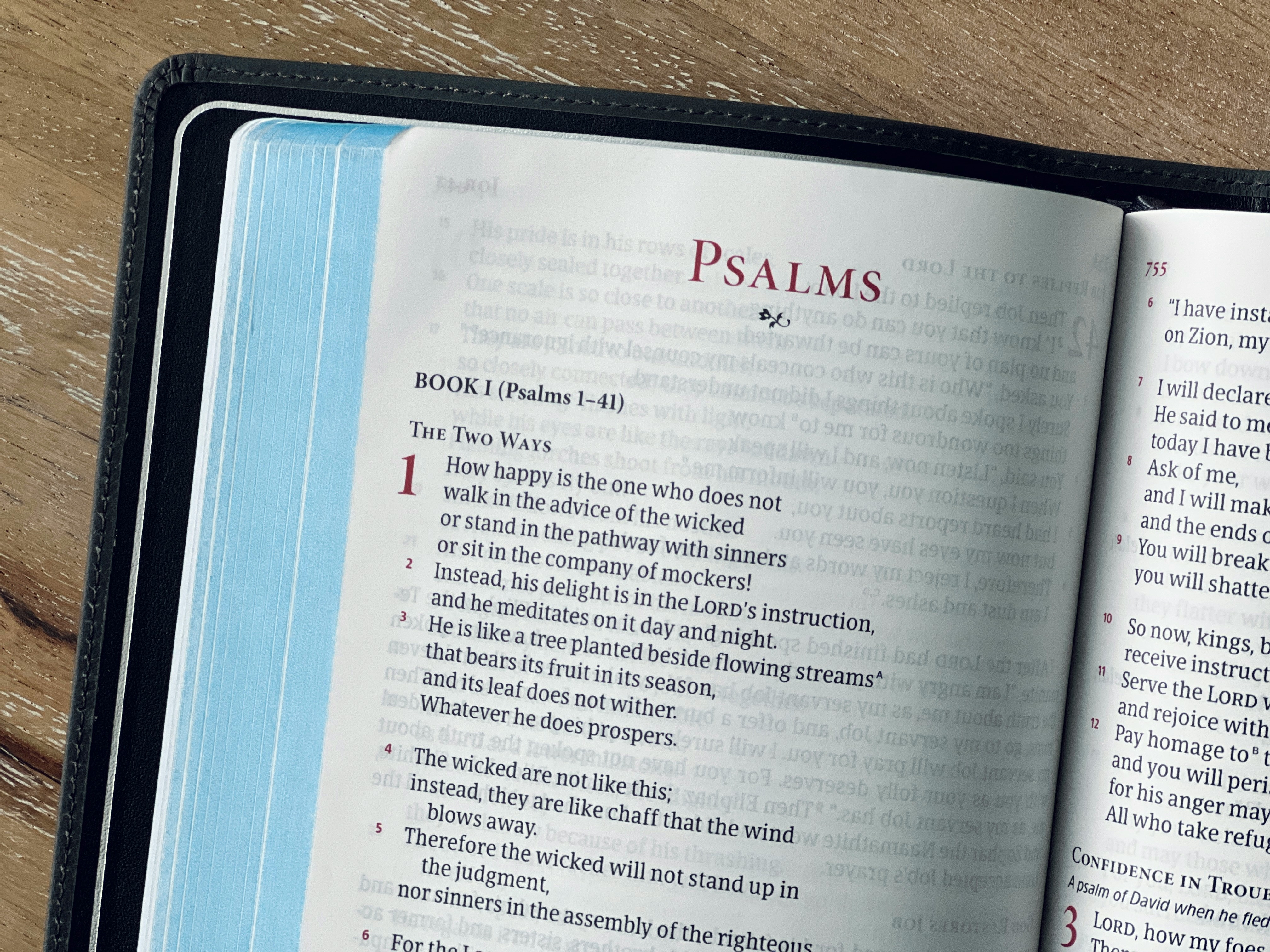
In this series of articles, I want to help believers better understand what biblical mediation is and why it is vital to the Christian life. Specifically, I want to help you see that biblical meditation is the practice of thinking deeply and richly on the Word of God so that our thoughts, words, and actions are transformed to become more like Christ’s thoughts, words, and actions to the glory of God.
In the first set of articles, I will offer a biblical survey and word study on the relevant biblical texts and words on the topic of meditation. This will help us see for ourselves what Scripture teaches on the discipline of meditation.
In the second set of articles, I will use that survey to explore and contrast Eastern meditation practices and the modern psychological practice of mindfulness with biblical meditation to show that they are incompatible with biblical medtiation.
Finally, in the last article, I will highlight the Puritan practice of meditation as an example of biblical meditation done correctly and the benefits it can afford to the believer.
Defining Biblical Meditation
Often, when Christian meditation is contrasted to Eastern meditation, with Eastern meditation’s goal of emptying the mind, meditation is summed up as a filling up of the mind with Scripture.1 But is that a sufficient description of all that mediation entails? To understand what meditation is, as God would have us understand the practice, we must first go to his Word and see what he has said on the topic. Is meditation even a Christian spiritual practice? Are there proper and improper forms of meditation? What does true meditation actually entail? Thankfully, we do not need to seek out some guru or mountaintop mystic to find the answer to those questions; we just have to open up our Bibles.
Contrary to what many professing Christians may think today, meditation is not an idolatrous practice, nor did it originate with Eastern religion. Meditation was invented by God and then twisted by sinners into the vain form of Eastern meditation that we see today. Meditation is first explicitly mentioned in Genesis 24:63 where Isaac meets Rebekah while he was out meditating in the field at evening. Although this verse is descriptive and not prescriptive, it does reveal some things about meditation. First, it tells us that God’s people meditate. The rest of the biblical texts we will explore in this article reaffirm that God’s people are to regularly practice the discipline of meditation. Meditation, in its true form, is not a pagan idolatrous practice.
Second, Isaac went out to meditate. Again, this is not a prescriptive text which instructs the reader on how to meditate. But as we study the specific words that Scripture uses to describe this practice we will see that mediation is a discipline that is done alone. Though meditation could be done with others around, it is most effectively done in solitude. As to the content of Isaac’s meditation, the text does not tell us and so must not go beyond the text.
Before we continue further into the Biblical text, however, we should at the outset make sure that we understand our terms. One of the main words that the Old Testament authors use for meditation is hagah (הָגָה). The word occurs twenty-five times in the Old Testament, and it means to “moan,” “growl,” “utter,” “speak,” or “muse.”2 While the word definitely carries with it a vocal component, the contexts of the various usages of this word that seem to point to more of an inner muttering or musing; what we might think of as someone speaking to themselves either under their breath or silently in their mind.
The second main Hebrew word for meditation siyach (שִׂיחַ). Siyach is a similar word to hagah in that it has a range of verbal and mental meanings such as “commune,” “declare,” “muse,” “meditate,” and “speak.”3 As Allen P. Ross notes, “One single English translation will not capture the range of this word, but all the uses have the idea of rehearsing or recalling, whether a complaint, a praise, or a meditation.”4 From this, we can readily see that when we come to the term ‘meditate’ in Scripture, whether the underlying word is hagah, siyach, or some variation of the two, what the author means by the term is determined heavily by the context in which he writes.
We can also observe from the two words that deep thinking is involved in the practice of meditation. When one mutters to themselves or is speaking something out loud, they are thinking on the thing that they are muttering or speaking. As we will see, this will be a major contrast to the mindless chants that accompany Eastern meditation practices which are intended to, “anchor the attention and keep the mind from wandering.”5 Whereas thinking in Eastern meditative practices is minimized and meant to be vapid, the words God uses to describe meditation describe a type of thinking that goes beyond surface-level thinking about something or someone. Rather, meditation is an intense cogitation on a topic, similar to a jeweler meticulously examining a diamond from every angle under his jeweler’s loupe.
Donald S. Whitney, quoting the Puritan William Bridge, correctly notes that, “Occasional Godward thoughts are not meditation.” “A man may think on God every day,” said William Bridge, “and meditate on God no day.” God calls us through the Scriptures to develop the practice of dwelling on Him in our thoughts.”6 Meditation is not just thinking, but deep thinking.
Meditation in Joshua
The next explicit reference to meditation is Joshua 1:8 which is a key text in understanding not only what meditation entails, as in the practice of it, but also what should be the normal content of it. In Joshua 1, Moses, Israel’s leader, prophet, and mediator before God, has died. Before Moses’ death, God had chosen Joshua to be the one to succeed Moses and lead his people into the land he had promised to Abraham, Isaac, and Jacob (Num. 27:18-21). This was a monumental task. Joshua had been one of the twelve spies sent into the land forty years prior. He had seen firsthand the power of the people the Israelites were to do battle with. Not only that, but Joshua knew how fickle and faithless his own people could be: Other than Joshua and Caleb, every other Israelite of his generation fell in the wilderness due to their disobedience. So, the book of Joshua opens with the Lord encouraging Joshua to be strong and courageous (Josh. 1:6).
From where was Joshua to draw this strength and courage? The written Word of God that was delivered through Moses (v. 7). Of this Word God tells Joshua, “This Book of the Law shall not depart from your mouth, but you shall meditate on it day and night, so that you may be careful to do according to all that is written in it. For then you will make your way prosperous, and then you will have good success” (Josh. 1:8).7 In this passage, what is Joshua to mutter which will give him success? What is the content of his meditation supposed to be? It is the Book of the Law that God inspired Moses to write. It is the Pentateuch, the written Word of God, that is not to leave Joshua’s mouth. Joshua’s meditations must necessarily be tied to Scripture.
This is not mindless repetition, however. Nor is it, again, necessarily vocal. As the leader of Israel, it wouldn’t be profitable for him or the people if he was just mindlessly muttering random verses all day and night. Rather, the purpose of this meditation is for his faith in and his obedience to the Word of God, “so that you may be careful to do according to all that is written in it,” (Josh. 1:8). Thus, meditation is for the purpose of spiritual growth seen in an increased understanding of God’s Word and obedience to it. By meditating on the Book of the Law, Joshua is to not only increase in knowledge; that knowledge is to transform how he lives. Lastly, that Joshua is to meditate day and night informs us that meditation is a discipline that is to be practiced consistently and frequently. David Mathis is right when he sums up Joshua 1:8, saying,
God means not for Joshua to be merely familiar with the Book, or that he read through sections of it quickly in the morning, or even just that he go deep in it in study, but that he be captivated by it and build his life on its truths… God’s words of instruction are to saturate his life, give him direction, shape his mind, form his patterns, fuel his affections, and inspire his actions.8
Meditation is intended by God to be one of the means whereby his people are transformed by the renewal of their minds as they persistently read and think deeply on the truths of Scripture.
Meditation in Job and in the Psalms
The next major locus of Scriptural teaching on meditation is the Psalms, but there is one more verse with a mention of meditation before then. In Job 15:4 Job’s friend Eliphaz accuses Job of, “… doing away with the fear of God and hindering meditation before God.” As any reader of the book of Job knows, Job’s three friends are miserable comforters (Job 16:2). While the friends do say several true things concerning God and the way that God governs the world, they horribly misapply those truths to Job’s situation out of ignorance. Nevertheless, there are nuggets of truth sprinkled throughout the friend’s speeches. In chapter fifteen Eliphaz is responding to Job and accuses Job of speaking wrongly about God and God’s rule (Job 15:1-3). This is the context of verse four where Eliphaz claims that Job’s wrong claims of reality are doing away with the fear of God and thus hindering meditation before God. While we cannot determine if Job is actually doing this, Eliphaz is right to imply that a wrong view of reality and God hinder meditation. One’s meditation is impeded when they do not have a proper knowledge or proper thoughts about God. This further adds to what was learned in Joshua 1:8, namely that one’s meditation must be rooted in God’s Word. This is going to be strongly reinforced in the Psalms.
As Israel’s book of worship it is no surprise that the Psalms teach us much concerning true mediation. That instruction on this valuable discipline begins in Psalm 1:2 where the blessed man is described as one who’s, “delight is in the law of the LORD, and on his law he mediates day and night.” Again, we have the word hagah. The blessed man muses upon, utters, or speaks the law day and night. Psalm 1:2 is emblematic of the Psalter as to what it reveals about biblical meditation. As we explore the Psalter, we will learn much about meditation’s content, purpose, motivation, and even method.
As to the content of true meditation, the authors of the Psalms agree with Joshua that meditation must be rooted in the objective written Word of God. In Psalm 1:2, the blessed man meditates on the law of the LORD. Law here, as well as elsewhere in the Psalter, is translated from the Hebrew word torah(תּוֹרָה), which, at the very least, refers to the Pentateuch but is often used as a term to describe the whole of Scripture. Likewise, the Psalmist of Psalm 119 in his love song about the word of the Lord writes, “I will meditate on your precepts and fix my eyes on your ways,” (Ps. 119:15). He speaks of meditating on the statutes, precepts, commandments, promises, and law of the Lord in several other places in that psalm as well (Ps. 119:23, 27, 48, 78, 97, 99, 148). The Word of the Lord is to be the baseline, the foundation of one’s meditation.
It is pertinent here, as we are discussing the foundational aspect that the Word of God has on mediation, to mention a little bit about how one is to meditate. There are no explicit statements in the psalms about how the believer is to meditate. This is likely due to the subjective element of meditation, that it can be practiced wherever the believer is (Josh. 1:8), and, as with all of God’s commands, the focus is not on form but heart posture. However, there is an implicit element of biblical meditation’s form that is tied to its content, which is that it is to be done with the written Word either opened before the meditator or memorized by the meditator. In ancient Israel, believers did not have their own personal copy of the Scriptures. And yet they were to speak of the Scriptures at all time and to meditate on it day and night (Deut. 6:7-9; Ps. 1:2). How were believers to do this? By storing the Word in their hearts (Deut. 6:6; 11:18; Ps. 119:11). As their local Levitical priests taught them out of the Word the people were to memorize it so that it would be with them wherever they were and they could accurately think deeply on what God had revealed. Thus, there is no instruction in the psalms or elsewhere in the Old Testament about proper form while meditating, whether it is to be done sitting, standing, or laying down, nor does it provide a checklist of questions the believer is to ask of whatever passage or topic they are meditating on. It is abundantly clear, however, that if Scripture is not involved in one’s meditation, whether that is in the form of thinking on explicit verses or thinking in terms of what Scripture teaches concerning a certain topic, then it cannot be considered meditation. Describing the uniqueness of Christian meditation, one author states, “Christian meditation begins with our eyes in the Book, ears open to the word, or a mind stocked with memorized Scripture.”9
Nevertheless, that meditation is to be done grounded and bounded by the Scriptures does not mean that to truly meditate you must only be thinking deeply on literal verses of the Bible. The Scriptures, and particularly the Psalms, teach that one can meditate on a variety of things including creation, God’s person and work, and even on one’s present situation. For instance, the psalmist of Psalm 49:3 writes that his mouth will speak wisdom and that the meditation of his heart will be understanding. He goes on to describe his thoughts concerning his current situation as well as how God governs His world. These objective truths about God would be the things that he is meditating on with wisdom and understanding. Similarly, in Psalm 63:6 David writes that he remembers and meditates on God as he’s going to sleep, and the content of that meditation is God’s previous protection of David and David’s dependance on the Lord (Ps. 63:7-8). In Psalm 77 Asaph meditates on God’s character, namely His faithfulness and steadfast love to deliver His people (Ps. 77:6-9). He also meditates on the works of God, how He has redeemed His people (Ps. 77:12-15). Likewise, David meditates on the works of God in Psalm 143:5, writing, “I will meditate on all that you have done; I ponder the work of your hands.” As Ross notes on this verse, David was, “constantly rehearsing and pondering what God had done, beginning in antiquity.”10 In addition to these, it is clear from the poetic nature and language of the psalms that the psalmists all employed their imaginations as they meditated on these things. In saying that meditation may employ a person’s imagination and life experiences, we want to be careful that we do not meditate on our personal experience, God’s character and work, or God’s creation apart from God’s Word. Each of these psalmists had a firm biblical foundation they are drawing upon, and they are meditating on those different things through the lens of what they have learned in and memorized from Scripture. Where does one gain wisdom and understanding in the Scriptures, particularly in the wisdom literature? It is the fear of Yahweh, which does not come apart from Yahweh’s written Word (Ps. 11:10). Where does one learn of God’s character and work? It is only in the Scriptures. In fact, in Psalm 119:27 the psalmist writes, “Make me understand the way of your precepts, and I will meditate on your wondrous works.” For him, meditation on God’s works only comes after his Bible study. How does one properly interpret current events and personal experience? Only with a Biblical worldview. Likewise, the psalmists never let their imaginations and colorful words run ahead of what the Scriptures teach and into baseless speculation. Their imaginations were constrained by what they knew of the truth. Donald Whitney insightfully reminds us that our, “imagination is our servant to help us meditate on things that are true.”11 He continues, “Meditation is essentially a subjective activity, a fact that underscores the importance of basing it on Scripture, the perfectly objective resource.”12 A believer practicing true, Biblical meditation may be deeply thinking on a vast range of different topics, but they will always be thinking of those things in reference and subjection to the objective Word of God.
As to the purpose of meditation, we already saw in Joshua 1:8 that one key purpose of biblical meditation is the spiritual growth of the believer as well as their understanding. The Psalms, particularly Psalm 119, gives a hearty amen to meditation’s vital role in the believer’s spiritual growth (Ps. 119:9-16, 97-99). Meditation is purposed to shape and transform the believer’s thinking, words, actions, and prayers. The author of Psalm 119 delighted in the law and meditated it on so that he could learn how to better apply it to his life (Ps. 119:97-104). Therefore, a key part of biblical meditation is thinking deeply on how the passage of Scripture or attribute or work of God that you are meditating on should be affecting how you live. The purpose of meditation is not about feeling better, clearing the mind, or about gaining inner peace which are all subjective measures based on one’s attitude and condition at a particular moment. Meditation, according to the Old Testament, is about transforming the mind to better think God’s thoughts after Him and therefore to better live according to His law.13 Meditation that does not lead to application in the life of the one meditating is a foreign concept to the Scriptures. How can a man who delights in the Lord and who is drawing deeply from the well of His Word not be changed by it (Rom. 12:1-2)? Donald Whitney is right when he says that “the outcome of meditation should be application. Like chewing without swallowing, so meditation is incomplete without some type of application.”14
But the one meditating for the purpose of spiritual growth and conformity to God’s Word does not do so out of slavish obligation to God. Rather, as a child who delights in his parents seeks to please them through his obedience, so the believer meditates. As David prays in Psalm 19:14, the believer’s intention is that their meditation is an acceptable form of worship to God. Likewise, the psalmist of Psalm 104:34 writes, “May my meditation be pleasing to him, for I rejoice in the LORD.” Meditation is not just obedience, nor is ultimately for the one meditating. Rather, it is a part of the believer’s worship to God out of their love for Him and their joy in Him. The ultimate purpose of meditation, which undergirds the believer’s desire to be conformed to the Word of God, is the glory of God. We can therefore conclude that any form of so-called meditation that does not aim to bring glory to God is an illegitimate form of meditation that is certainly not biblical and should not be practiced by the Christian.
This desire to glorify God through meditation springs out of a supreme delight in God and His Word. As David W. Saxton quotes the Puritan Thomas Watson in saying,
He who delights in God’s law is often thinking on it. What a man delights in, his thoughts are running upon. He who delights in money finds his mind taken up with it; therefore the covetous man is said to ‘mind earthly things’ (Phil. 3:19). Thus, if there is a delight in the things of God, the mind will be musing upon them.15
Conclusion
We see joy’s relation to meditation clearly in Psalm 1:2 as the blessed man’s meditation is clearly linked to his delight in the Torah. In Psalm 104:34, the psalmist’s joy is the explicit reason for his meditation. Likewise, joy is heavily connected to meditation in the longest psalm, Psalm 119. For instance, in Psalm 119:14-16 the Psalmist sings, “In the way of your testimonies I delight as much as in all riches. I will meditate on your precepts and fix my eyes on your ways. I will delight in your statutes; I will not forget your word.” Ross pithily, but correctly, comments that, “whatever form the meditation may have taken, it would be joyous.”16 As mentioned above, although meditation is commanded of the believer, and thus the believer is to practice it, the believer does not meditate out of obligation nor out of a legalistic desire to work their way into God’s favor. In stark contrast, meditation is an outflowing of the delight and love that the one meditating has for God and His Word. Not only that, but the believer’s meditation serves as a further source of greater joy in the heart of the believer. Meditation is a veritable perpetual motion machine of joy where the believer’s joy causes him to meditate on God, that meditation then multiplies his joy, which then fuels his desire to meditate on the Lord all the more (Ps. 63:5-7; 145:4-7).
In the next article, we will consider what the New Testament teaches about meditation.
NOTES
1David Saxton, God’s Battle Plan For The Mind (Grand Rapids: Reformation Heritage Books, 2015), 20.
2Strong’s Exhaustive Concordance, Bible Hub. Accessed October 22, 2025. https://biblehub.com/hebrew/1897.htm
3Strong’s Exhaustive Concordance, Bible Hub. Accessed October 22, 2025. https://biblehub.com/hebrew/7878.htm
4Allen P. Ross, A Commentary on the Psalms: Volume 3 (90-150) (Grand Rapids: Kregel, 2016), 479.
5Nicholas Buxton, The Wilderness Within: Meditation and the Modern Life (Norwich: Canterbury Press, 2014), xiii
6Donald S. Whitney, Spiritual Disciplines for the Christian Life (Colorado Springs: NavPress, 1991), 61.
7In these articles I will be using the English Standard Version (ESV) unless otherwise noted.
8David Mathis, Habits of Grace (Wheaton: Crossway, 2016), 57.
9Mathis, Habits of Grace, 59.
10Ross, A Commentary on the Psalms: Volume 3 (90-150), 882.
11Whitney, Spiritual Disciplines, 47.
12Whitney, Spiritual Disciplines, 52.
13Saxton, God’s Battle Plan For The Mind, 20.
14Whitney, Spiritual Disciplines, 54.
15Saxton, God’s Battle Plan For The Mind, 26.
16Ross, A Commentary on the Psalms: Volume 3 (90-150), 479.