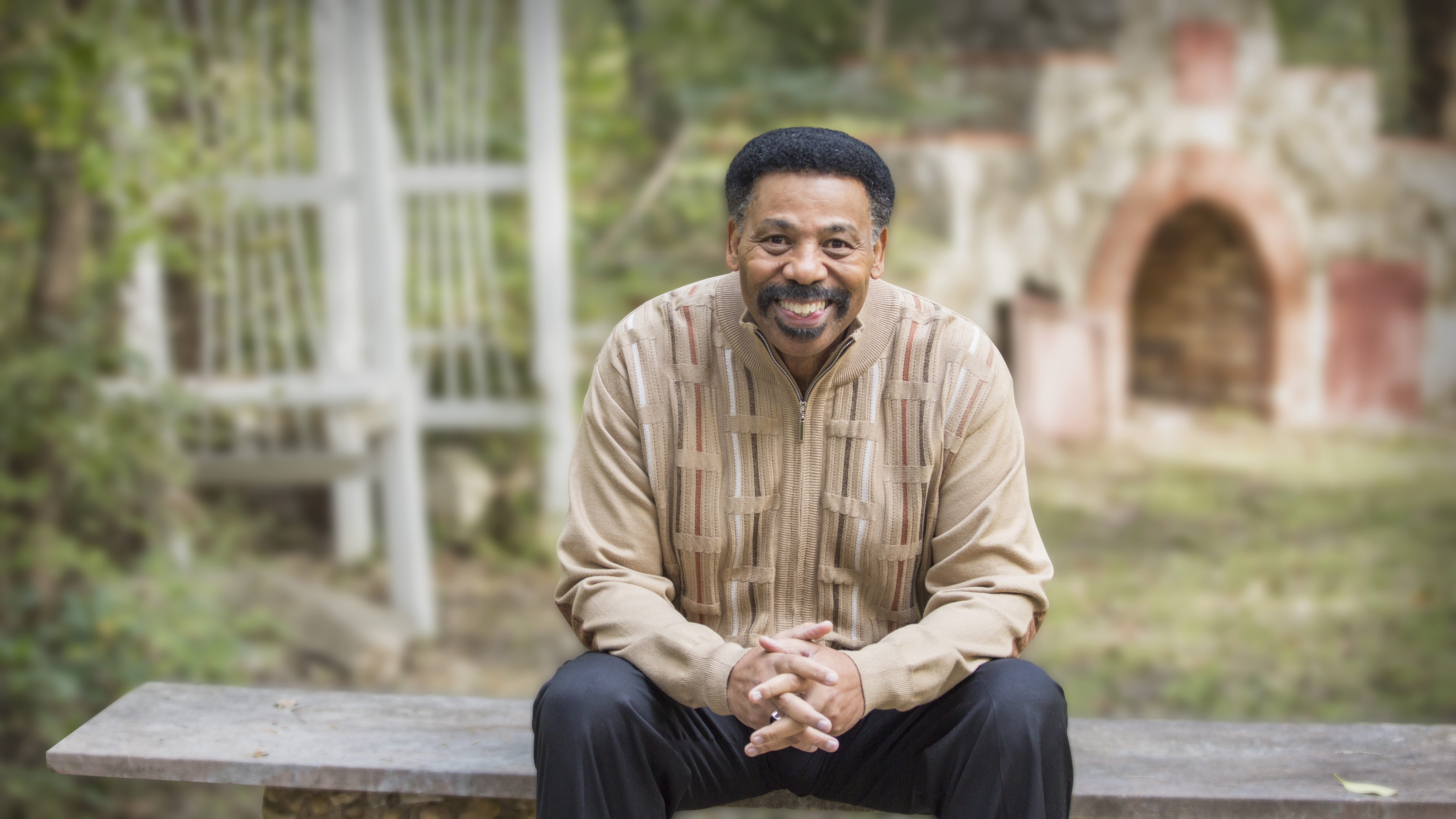
In this episode, pastors Derek and Cliff discuss Tony Evans’ recent resignation from from his pastoral role at Oak Cliff Bible Fellowship in Dallas, Texas and important lessons we can learn about the leadership structure at Oak Cliff.
Transcript
Derek: Welcome to the With All Wisdom podcast, where we are applying biblical truth to everyday life. My name is Derek Brown, and I’m here today with Cliff McManis. We are both pastors and elders at Creekside Bible Church in Cupertino, California, and professors of theology at the Cornerstone Bible College and Seminary in Vallejo, California. And today, we want to follow up on our five-episode series on elders, and we encourage you to check that out on withallwisdom.org. We’ve done the last five episodes we have done on eldership, specifically on why a church needs a plurality of elders, and then talking about qualifications for elders, and we’re following up that series with a discussion on the recent situation with Tony Evans. We thought that would be helpful for our listeners, and so we are going to jump into that in a moment, but before we do, I do want to encourage you to check out withallwisdom.org. That’s the website where we host our podcast. We have a number of articles there, videos, other audio resources that are all grounded in God’s Word, and they aim to help you grow in your relationship with the Lord Jesus, grow in discernment, grow in spiritual maturity, and that’s why we produce these resources. It’s for your spiritual growth, and we seek to aim and we seek to root everything in the Word of God. Check out withallwisdom.org, and now I want to turn it over to you, Cliff. How would you frame this situation? How would you help inform our listeners about what’s going on?
Cliff: Yeah, this talk might be, I mean, we could just title it Tony Evans or Lessons Learned from the Recent Events of Tony Evans’ Life. You and I talked, and we decided to do a podcast on recent events regarding Pastor Tony Evans for several reasons. Actually, we had people that we know from our church inquiring asking what we think. Also we noticed a lot of other people were talking about it on podcasts and news sources, some good, some not so good. I also thought it would be good, oh, yeah, because it was kind of directly related to the series that we had just finished, as you mentioned, of our podcasts on elders. And then also I think there are lessons that can be learned, because we did a podcast quite a while ago on fallen ministers or pastors when they either defect from the faith or when they compromise and just kind of trying to come up with encouraging or practical lessons that we can learn from that, because we can.
Derek: Right.
Cliff: I remember, I didn’t mention this to you, but when I was at the Master’s College, John MacArthur, so that must have been in the 80s, yeah, late 80s, John MacArthur actually did a chapel message at the Master’s College. It was called Ten Lessons to Learn from the Fall of Jimmy Swaggart. And Jimmy Swaggart was a very famous televangelist, preacher, and got in trouble. And then John MacArthur came up with that sermon, Ten Lessons We Can Learn from the Fall of Jimmy Swaggart. I was a new Christian at the time, so I thought, there’s not ten lessons we can learn. There’s nothing in the Bible about that, John MacArthur should, no, actually there are biblical principles directly related to that. So that was part of my learning about biblical sufficiency. You can actually go to the Bible regarding any situation and vet it through principles that intersect with that issue that are in the Bible. So we could do the same thing, lessons learned from the latest situation regarding Tony Evans.
Derek: Yeah.
Cliff: So that’s kind of what we’re going to do here. And specifically, I wanted our listening audience to know and be reminded of, we did a podcast regarding elders on Friday, June 7th. I think it was in that one where you and I were talking about the importance of having a plurality of elders, because that was in God’s wisdom, because He cared for the church, He cared for His people, He cares for us. But He also knows that we’re weak and frail and sinful, and if we don’t have a plurality, we don’t have accountability that we need to keep us in check. And therefore, we become vulnerable, and also our congregation becomes vulnerable. I pointed out, I mentioned a couple of church ministries that didn’t hold to a plurality of elders as I believe the biblical model holds, and I said, as a result, because they’re the lone guy, the lone ranger, you go on the church website and all you see is their picture, and it’s like, where are their elders? Where are the other church leaders? And it’s just one man by himself. And I mentioned Tony Evans churches like that, and he wrote a book on it and said, he’s the man, the buck stops with me. And as a result, I said, Tony Evans has put himself in a dangerous and vulnerable position by having that attitude in that church structure, and I actually use the word dangerous because he lacks accountability. And then unbeknownst to me and you, two days later, Tony Evans resigns unexpectedly as he’s speaking to his congregation of whatever it is, 10 plus thousand people, 11,000 people, where he’s been a pastor for 48 years. So they were shocked, caught off guard as most of the Christian world was, didn’t see this coming. So just so you know, we didn’t make that comment about Tony Evans after he resigned. We made it two days before he resigned.
Derek: And let me say something about that because we often record episodes before they’re posted. And so the post date for that one was June 10th, but it was recorded on June 7th. So that’s important for our listeners to know that it was recorded. You said those things before Tony Evans actually announced his resignation. So that’s important for people to know the chronology. Though we posted it on the 10th, that episode had been recorded on the 7th, two days prior to Tony Evans making his announcement.
Cliff: Yeah. And that was not a prophetic announcement at all. It was just a practical observation. And I mentioned Tony Evans specifically because I actually have liked and followed and respected Tony Evans since the 1980s when I first met him, when I was a student at the Master’s College and he came and spoke in chapel there. And I still remember that message he preached out of the book of Daniel in 1988, I think it was. So I followed his ministry ever since then. And I recently reread a book that he wrote on the church and church leadership. And it’s in that church leadership book where he adamantly states that he just believes not in plural leadership, but somebody’s got to rise to the top and he’s the man and the buck stops with me. That’s what he says. And I thought, boy, that’s dangerous. And it proved to be so.
Derek: Yeah. That’s an important thing to say that what we were arguing for in those episodes, again, we encourage you to go back and listen to all the episodes on eldership, what we were saying in those early ones was that God has told the church biblically how they should organize their leadership, that leadership is within a plurality of elders. It’s not just located in one person and that scripture teaches that. And then we also talked about all the benefits that flow from that. And then we talked about why people resist a plurality of elders. And so we weren’t, like you said, we weren’t attempting to make a prophetic announcement, but we were simply saying that if you are resisting God’s plan and wisdom for leadership in the local church, you’re placing yourself in a dangerous position. And those things proved out in real time recently with Tony Evans. So I just think it’s an important wake-up call for people to stand back and say there’s something to this, that there’s something to this biblical model that God lays out. And that’s why we talked about all the various benefits that flow out of a plurality of elders. Not only is it biblically mandated, but there are multiple benefits that protect the leaders and protect the congregation. And here we’re on the other side of a controversy that has come out of a situation where the man was in a senior pastor role.
Cliff: Yeah. One thing that you and I said as well in those episodes, one of the benefits of having a plurality of elders or a plurality of pastors in your church is how it protects the church. Because if you only have one guy that represents the church, one man, like Tony Evans, he’s the man. You go on the website, you talk about his church, Oak Cliff Bible Fellowship in Texas. Nobody knows the names of the other elders. It’s one guy. He’s in charge. It’s like Charles Stanley at his church, same thing. All these one-guy churches, what happens when that guy goes down? Whether he dies, he defects, he compromises, he falls into sin, he gets sick. What happens to that church, especially when it’s a big church of 10 or 11,000 people? Now it’s like these church, 11,000 people are flailing without a pastor, the guy who’s been the man for 48 years. If you had a plurality of elders who were shepherding co-equally, that we think is the model, then the church is not vulnerable. Tony Evans is not there, but they got other elders just continue on as is. And that protects the church and God’s wisdom. So it’s like the early Church of Jerusalem. Jesus started the first Church of Jerusalem with 12 apostles, and then immediately a plurality of elders were added to the leadership, including James, the half-brother of the Lord. So they had maybe a couple dozen elders, so that one of the elders and apostles gets murdered by Herod, the church still goes on, and that was a key leader in that church.
Derek: And I think you’ve already mentioned it in this episode already, but Tony Evans did have a plurality of elders. So there were elders, but he was the senior pastor, and you’d already mentioned some of the things he had said about his role and how he viewed his role. And so one thing we need to say is that just merely having a plurality of elders is necessary, but not sufficient. What is dangerous about his particular model is that you have one man that has, for all appearances’ sake, seems to have more authority than the others. He has less accountability than the others. He seems to have a position that is over the others, and so what we’re arguing against is the senior pastor model, even if you are including in that a plurality of elders.
Cliff: Yeah. We talked about that. The Austin American Statesman, this is a newspaper, I guess, they reported on this, Tony Evans stepping down. First sentence here, in a statement posted Sunday to the church’s website, Tony Evans, the senior pastor at Oak Cliff Bible Fellowship in Dallas, stepped down. So we took issue with that senior pastor wording, because Jesus is the only senior pastor. That’s clear. And people think I’m petty about that. I’m like, no, it’s in the Bible.
Derek: Chief Shepherd, that’s right.
Cliff: He is the chief shepherd. He is the senior pastor and the only one. That’s not petty, it’s in the Bible. And another benefit of embracing that biblical truth is right now, there’s a lot of people saying that, oh, Tony Evans, the senior pastor stepped down, so we don’t have a senior pastor. Well, yeah, you do. Jesus is still the senior pastor of Oak Cliff Bible Fellowship, even while Tony Evans is not there. So that’s how they need to think. He’s the head of the church. He’s the savior of the church and the Lord of the church and the only one. Derek, I thought we could give a little, some people might be out there listening, well, who’s Tony Evans? Can we give a little just sketch of Tony Evans? Who is he?
Derek: Well, he is a well-known pastor. He’s also an author. He’s a well-known author. He’s published many, many books. He’s been doing a lot of ministry for a long time. He’s well respected in many important evangelical circles and he’s been at this church. How long did you say he’s been at this particular church?
Cliff: About 48 years.
Derek: Wow. So he’s got a longstanding ministry there. He’s been faithful. As far as we know, this is the only thing we’ve heard. He’s faithfully taught the Bible. He’s preached. He’s got his bachelor’s at Carver College in 72, his THM in 1976, and a THD at Dallas Theological Seminary in 1982. So well-educated, well-trained.
Cliff: That’s a real doctorate. A real earned doctorate.
Derek: That’s a real thing.
Cliff: An academic doctorate from Dallas Seminary. That’s legit.
Derek: Yep. He’s had various speaking engagements around the world. In fact, at the time of this revelation of his stepping down, he was slated to speak on a cruise and he was going to keep that plan to speak on that cruise and it was recently found out that that cruise actually took him off the guest list. He’s not going to be speaking there. Nevertheless, prior to that, he’s a well-known speaker, speaking all over the place, large church that you mentioned, several thousand people in Dallas, Texas.
Cliff: Let me chime in there, too, on a personal note. I mentioned earlier that he did speak at the Master’s College, I think it was in 1988. So I would have been, I think, a junior in college at the Master’s College at the time. So he was friends with John MacArthur. I don’t know if they remained friends, but probably. He did a great job preaching out of the book of Daniel. That’s when I first saw him and met him, 1988, and then I followed his ministry ever since then. I got to see him again and talked to him about 20 years ago when he came here to the Bay Area from Texas and he spoke here up in the San Francisco Bay Area at the Bass Convention, the Bay Area Sunday School Convention every year. It’s huge. He did a great job, preached out of Matthew 5 to a couple thousand people on being salt and light. I saw him and sat down and chatted with him at the Shepherds Conference about seven years ago and just asked him about some recent controversy regarding some of his theology in a book he wrote on soteriology, getting his personal perspective and explanation on it. And then I interacted with him through email after that as well about missions stuff. So I had a personal interest in him. I respected him. He came from Dallas Seminary. So he’s always been orthodox in his teaching. He was trained to be an expository preacher. There are some sermons that he does that are expository, some that are thematic. He is a dynamic speaker, a phenomenal communicator. And actually at the Cornerstone Seminary, where you and I both teach, on the occasions where I’ve been able to teach the theology of preaching, I always expose the students to Tony Evans because I want them to see his style. He is a dynamic, clear communicator. And like I said, he is orthodox in his theology most of the time. Some things have recently come up where people have questioned that, and I believe it deserves the scrutiny. Maybe we can talk a little bit about that. But anyway, he’s just been, for 48 years, been highly respected. This takes me back to something you and I said. We were going over the qualifications, the 22 qualifications of an elder. One statement that you and I made was to be an elder and pastor, you have to be qualified. And the verbs are present tense, so it’s about your status now. But you can become disqualified. And that’s what Paul feared. Paul didn’t trust himself. Paul the apostle. He buffets, I buffet my body, I discipline myself so that I won’t become disqualified in the ministry. That’s another good sober warning for all of us in the ministries that are pastors. Just because you’re qualified today doesn’t mean you’re going to be qualified tomorrow. And that’s probably what happened with Tony Evans.
Derek: Right. It’s that fight of faith that’s a daily fight. That you can’t become lax or rest on your laurels.
Cliff: Yep. So, Derek, can I read this statement, this paragraph that he read, that Tony Evans read from his church?
Derek: Yeah.
Cliff: Do you have it?
Derek: No. Please, yeah, please do.
Cliff: Okay. It’s a longer, the statement was longer. I’m just taking a little excerpt from it. So on Sunday, June 9th, apparently this is a statement that Tony Evans had read. He had already been in conversation with his elders at his church, and collectively they agreed he should read the statement that was pre-written, and also him with his elders agreed that he should step down, effective immediately. And so here’s a portion of the statement, quote, Tony Evans says the foundation of our ministry here at his church has always been our commitment to the Word of God as the absolute supreme standard of truth to which we are to conform our lives. That’s good. And then he goes on, when we fall short, that is as Christians, when we fall short of that standard due to sin, we are required to repent and restore our relationship with God. A number of years ago, I fell short of that standard. I am therefore required to apply the same biblical standard of repentance and restoration to myself that I have applied to others. Evans also went on to say, quote, that he had committed no crime, end quote, although he used the word sin, but he said I had committed no crime, and, quote, did not use righteous judgment in my actions, end quote. So in the statement, we don’t know what the sin is, so that’s what everybody’s been talking about and speculating about.
Derek: Right. A lot of speculation.
Cliff: Yeah. Did you have any thoughts on that, quote, Derek? Because I did.
Derek: Yeah.
Cliff: Go ahead.
Derek: Because when I first heard that explanation, the first thing that stood out to me was that this is something that happened a while ago. And so I think naturally in a lot of people’s mind is, okay, why is it just now that he’s stepping down? That’s probably the biggest issue. So that if you are, I mean, we don’t know how much time because it’s left vague in terms of how much time, but it sounds like a significant amount of time. So between the time that that happened and now, the question is, was he disqualified during that time? And if so, what does repentance look like? If you were disqualified for those years that you were continuing to serve in ministry, what does repentance look like? And I think that’s the difficulty that I’m having with his explanation. It would be one thing to say, you know, a week, a month ago, a few months ago, this indiscretion happened or this sin happened and I need to step down and, you know, working through it and trying to figure out what to do, okay, give you some time. But the fact that this happened a while ago and that it’s just now coming out, that’s the troubling thing about that statement.
Cliff: Yeah, that’s exactly what jumped out at me. There’s a sin, he admits to some sort of sin and then he says as a pastor and as Christians, we are required to repent and restore a relationship with God and then he says, I am required to apply the same biblical standard of repentance to myself that I apply to others, meaning that as a pastor, elder, shepherd of this church, I deal with sin in the congregation and so I have to apply that same standard to myself. I would assume that as a pastor and elder that he deals with sin in his church rather quickly or efficiently, doesn’t wait for years to go by before dealing with known sin in the church. So that’s the disconnect there. As you pointed out, a number of years ago, so theoretically he could have been, like you said, unqualified for years now. We don’t know how many years. A number of years. Is that three? Is that seven? Is it 17?
Derek: Right. Wow, I think the congregation needs to know.
Cliff: I think so. The shepherd, the elders need to know and if the elders know, they need to divulge that to the members of the church. They have a right to know. Do you agree, Derek, that there’s sin that’s disqualifying sin and sin that’s not disqualifying it?
Derek: Yeah. I think that needs to be made plain as well.
Cliff: Absolutely. This is not a matter of, that’s why I think a lot of people have speculated around a particular sin. And namely, sexual immorality. Adultery and affair. Because that is a sin that is disqualifying. It’s not a crime to commit adultery.
Derek: It’s not a crime. That’s right.
Cliff: A crime from the world’s point of view, like it’s a violation of local law or federal law. You can commit all adultery that you want to and not go to jail.
Derek: Right.
Cliff: Does God think adultery is a crime? Absolutely.
Derek: Yeah. Well, that’s going to say, I want to make clear, it was not a civil crime when he says I did not commit a crime. It’s not a civil crime, but a crime against the Lord.
Cliff: Yeah. Exodus 20 is pretty clear. There are sins there that weren’t the death penalty. So that sounds like it could be a crime. But we don’t know what a sin was. But just being vague like that doesn’t help anybody. It makes people’s minds run.
Derek: Right. And I think, yeah, people have, a lot of people have latched onto that particular sin saying, well, it’s got to be that.
Cliff: Yep.
Derek: And again, we’re not saying that we know for sure that it is, but you know, we’ve been in ministry long enough and we’ve seen things like this a number of times, enough times to know that that often is the case and that it wouldn’t be surprising if a few months, weeks, years down the road we find out that in fact that’s what it was, but we’ll let that play out. But just the idea that a pastor can confess to a disqualifying sin that he must remove himself out of ministry now that happened years ago indicates that there was something malfunctioning at a deep level for that time from then the sin committed till now if he was remaining in ministry. And he needs to grapple with that. We need to grapple with that. This is a spiritually dangerous place to be, honestly.
Cliff: Yep. Another thing that concerned me was USA Today came out with an article at about the same time. USA Today, pretty well known. This was on June 13th, so three days later, an article, and they talked to a spokesperson from the church and they said, Evans, Tony Evans will be, quote, temporarily stepping away from his senior pastor’s duties, end quote, according to Sherry L. Carroll, a spokesperson of the church who said that in a Friday email to USA Today. So that concerned me, quote, temporarily stepping away, which implies, oh, I guess he’s coming back. So all the more we need to know the nature of the sin. So there’s a sin that can disqualify you and yet you can overcome it apparently and commit that sin and it doesn’t disqualify you permanently, just temporarily. I’m trying to think, what kind of sin does that? Disqualifies you only temporarily and not permanently. And they’re so confident and guaranteed about it. This is a spokesperson of the church saying this.
Derek: Wow. I looked on the website of the church and he’s still there, I believe, as of today, still there as the senior pastor in terms of the website’s description.
Cliff: Yeah, same here. It looks that way as you read the website because I thought the same thing. Had I not known about this and I went to that website, I’d be like, oh, Tony Evans is the senior pastor.
Derek: Yeah.
Cliff: So as we’re talking about Tony Evans, a brother and the Lord, fellow Christian, I think, loved God and had a strong testimony in ministry for so many years, especially to the community in which appeals to him, the African-American community. He’s a very strong voice from a biblical point of view in the community, which I think has been fantastic. So you know, we want to bring out these issues that are of a concern, but also I wanted to share this article, Derek, that I shared with you by the dissenter, it’s called, formerly known as a blog called Reformation Charlotte. Usually they got some interesting articles on there. They’re pretty well known. They were originally called Reformation Charlotte, some Christian guys that had an apologetic slash blog and then they turned it into a website on articles related to what’s going on in the Christian world. So it’s up to date. The emphasis of it is being discerning. They’re trying to, they call the blog now the dissenter instead of Reformation Charlotte because they wanted to dissent from compromised Christianity in America and so they’re always pointing out compromises in Christianity. So their blog tends to be negative, a lot of weird stuff on there, things that people call themselves Christians are doing weird stuff or compromised stuff or a lot of heretics, heresy, whatever. Anyway, so they have an article on Tony Evans stepping down and they came, they published this article, I think the time that it happened on June 10th or the day after in the headline is Tony Evans steps down from his pastor, quote, due to sin and then enters, quote, restoration process and then they just give a summary article about it and there were some concerning things in there that they said that I thought probably weren’t fair to Tony Evans. I just thought, oh, our listeners need to be aware of that. Be discerning no matter what you’re reading, what articles you’re reading at all times. So wait a second, you mean you should also be discerning when you’re reading blogs that are discernment blogs?
Cliff: Yeah, exactly. That’s the irony here. They claim to be a blog committed to teaching Christians how to be discerning and yet I think they do a disservice to the Christian community and Tony Evans here because they’re not dealing with facts in my opinion. For example, as they’re talking about Tony Evans, they are obviously, they have concerns about Tony Evans. They’ve written previously on him because they say in the first paragraph here, however, Tony Evans, his ministry, quote, his ministry has been marred by several heresies, end quote. So they’re accusing Tony Evans of being flawed by several heresies, not a heresy, but several. So my first question is, Kate, bring them on. I want to know what they are.
Derek: Yeah.
Cliff: If Tony Evans, this guy that I’ve actually liked, used in my homiletics class, read some of his books and I appreciate his ministry, if he’s full of several heresies, I want to know what they are and please give me the facts and evidence. They claim, but they don’t give any reference or facts or data to back it up. The first one, Tony Evans’ theological aberrations are not merely minor doctrinal differences. Some of them are serious fundamental deviations from orthodox Christianity, which would make him a heretic. So that’s a serious work that have been overlooked by much of evangelicalism. Quote, Evans taught Pelagianism, a heresy that denies the doctrine of original sin, suggesting instead that humans are born morally neutral and capable of choosing good without divine grace. So I just want to take issue with this sentence. These guys in this article are saying that Tony Evans taught Pelagianism, which is a heresy that denies the doctrine of original sin. So that’s my, I don’t think Tony Evans has denied the doctrine of original sin. I don’t think he’s taught Pelagianism. They’re accusing him of suggesting instead that humans are born morally neutral. I don’t think Tony Evans believes humans are born morally neutral. I know that from having read his books. And I know that. So that’s just one blatant error I wanted to point out. I have here, Derek, the Tony Evans study Bible that came out in 2019, the Tony Evans study Bible.
Derek: It’s got a sweet cover.
Cliff: It does.
Derek: I wish people could see that cover.
Cliff: Yep. So it was about five years ago. And you know, as typical study Bibles, he’ll have a key verse, and then he’ll have his own comment down below on thoughts trying to explain what that Bible verse means. And I just want to read from his comments on Romans 5, where Paul argues that sin entered the world through Adam and Adam’s first disobedience. And we would say that the Apostle Paul believed that Adam was a real man. Adam truly sinned, Adam and Eve, and that literally Adam’s disobedience was passed on to his descendants, including us, and that we are born sinners because of the disobedience sin that came through Adam. That would be original sin. I’m born a sinner because I got that sin from Adam. They’re saying that Tony Evans doesn’t believe that. He rejects. He’s a Pelagian. So Pelagius was a guy who lived during the time of Augustine in the fourth century AD. He was born in Britain, and then he roamed around. He went to Rome and taught. He spent some time in Africa. He spent some time in Jerusalem as a teacher. Some people say he was a monk. Some say we’re not sure he was a monk, but he lived kind of like a monk. He deprived himself. He was into a rigorous lifestyle. He was a very moral man, asceticism that he ascribed to, denying self. He pursued holiness with a vengeance, which he thought he could achieve, holiness on his own. He didn’t need God’s help to do it. And that’s where he got his heresy was that he believed that all human beings are born good, morally good. We aren’t cursed with the sin of Adam. We haven’t inherited Adam’s sin. As a matter of fact, every person that’s born from the time of Adam and Eve were born in a good state. We’re born in the natural state that Adam and Eve were first created. So he totally disregards the curse and the fall and its implications on the human being.
Derek: So in Pelagius’ view, man does not receive judicial guilt of Adam’s sin, nor do we receive a sinful nature from Adam.
Cliff: That is correct. Therefore, pretty much you could say that Pelagius believed everybody was born good, if not neutral at worst, but good. With the ability from God, because God loved us so much, He gave us a completely free will so that we have the ability to choose the good, to always choose the good, and to always say no to sin. He actually believed that his whole life and taught that. That is heretical. That’s a denial, clearly, of what the Bible teaches. It’s a denial of what Paul’s arguing in Romans 5, that we inherited sin from Adam, including original sin and total depravity and a sinful nature. The question is, does Tony Evans believe that? Well, he does. Romans 5 in his Bible commentary, here’s some of the notes that Tony Evans says. He acknowledges that Adam was a real man, we came from Adam, Adam was a sinner, and we inherited sin from Adam. So let me read just a couple quotes here from Tony Evans. In Romans 5, 1, verse 2, Tony Evans says, previously we were God’s enemies. We were at war with God. Through Jesus, however, He has drawn us close and made us His friends. So Pelagius didn’t believe that, that we were enemies of God. He goes on in commenting on Romans 5:14, a long quote, but important. Tony Evans says, we got our physical life from Adam, and we got our spiritual life from the last Adam, Christ. But just as Adam gave us sin through imputation, there it is.
Derek: That’s Reformed.
Cliff: That is. But just as Adam, a real guy, gave us sin through imputation, depositing sin into our accounts so that we were born with it. There it is. He believes in original sin.
Derek: Sounds like it.
Cliff: Christ imputes righteousness and life into us. He is our representative and in His righteousness we find ours. Unlike Adam, who gave us life and death, Jesus gives only life. And while we earned Adam’s penalty of death, that’s a strange statement, after all, every time we sin we show that we wouldn’t have chosen any better than Adam did, we receive the grace of God as a gift. You can group the human race under two people, Adam or Christ. Every person you meet is either in Adam or in Christ, and that’s a difference with eternal consequences. Even though we are all born sinners, all born sinners, having inherited original sin from Adam, inherited original sin from Adam.
Derek: That’s explicit.
Cliff: You just read that. So he believes in original sin. Christ’s blood covers us until we reach an age of accountability, that time when a person is capable of choosing to transgress and reject God’s revelation. So while there is condemnation for everyone, there is divine covering through Christ for those who have not yet chosen to rebel against God’s law. This explains how babies or people with mental handicaps are saved by Christ’s death since original sin is no longer the issue in those cases.
Derek: Right. So he’s pretty specific as to who those apply to. And I think if anything, and maybe this dissenter group is not being precise enough. If anything, it might be better to classify some of those statements that he’s made, because I’ve read a couple of others that they bring up, as maybe an Arminian view, but certainly not a Pelagian view. I think that kind of imprecision is not helpful at all, because those are two very, very different views. And so maybe you could make that argument, but even in some of the statements that you read there, he is making very clear statements about original sin. And like you said, there is debate about things like age of accountability and these sorts of things. Now, we would disagree with him on a couple of those statements, but I would not classify him as Pelagian.
Cliff: Yep. And one last statement that he makes that I think is clarifying, this is a quote from Tony Evans, Jesus Christ, through his death, covered original sin, and he means universally for everybody. The thing that the death of Christ did was cover and overrule original sin, so that no man is condemned because they are born in Adam. Now, that’s where we would disagree, but he still believes in original sin. They are condemned because they consistently reject salvation. So I think you’re right. I think this is more kind of a Wesleyan, Arminian holiness view of soteriology that says, oh yeah, we believe in original sin, but the death of Christ has universal benefit and efficiency towards everybody. And one of the main things it dealt with was original sin, and put them in a position where now they can pursue God. And Roman Catholicism holds a version of that.
Derek: Yeah. And we would argue against that, and that’s the Wesleyan, Arminian view that says that Jesus’ death on the cross, that atonement, there is original sin, but Jesus’ death on the cross wiped all of that out so that now people are able to choose Christ. And so the statement that you just read, combined with what you just read out of his study Bible, would make me critique him, you know, but from an Arminian perspective, not a Pelagian. And I think we need to make that clear because when you say someone is a Pelagian, you are saying they are holding to something that has been classified as rank heresy for the last several centuries, so it’s kind of a big deal.
Cliff: It is. It was actually Pelagius and his views were condemned officially at the Council of Ephesus I think in 431 and has been considered a heresy ever since then. And if you’re a Pelagian, you can’t, you’re not a Christian, it’s not biblical theology. You’re attacking the meaning of Jesus’ death and sin, so it undermines the entire faith. So we just wanted to kind of set the record straight. So that’s a good reminder for Christians if you’re reading those Christian so-called websites and anything, always be discerning, always be a Berean, says the book of Acts, 1 Thessalonians 5, examine everything carefully, hold fast to that which is good or true in keeping with scripture.
Derek: Exactly, because in our situation here where we are addressing a fellow brother, a pastor who has committed some sort of sin and there are things we have to discern here, even as we are working through some of those statements in his study Bible, we need to discern, we need to clarify, we need to understand statements in light of biblical truth. Even when you’re doing that, you can’t allow your whole life in ministry to become nothing but discerning the error in other people. And I think that’s kind of the underlying point that we would even make about websites like this when you are finding resources and ministries that only discern the error in other ministries, I think they are lopsided and I think they can actually become dangerous as well because that’s cultivating a spirit in you that is, like I said earlier, it’s lopsided, it’s not fully biblical, it’s not balanced, it’s majoring on certain elements of the Christian life but not focusing on others and we just need to be careful because in an example like this you actually had a situation where they said something that was incorrect about somebody.
Cliff: Yeah, and imagine now how many listeners or people who are reading their article actually believe that about Tony Evans, he’s a Pelagian, you just write him off as somebody who’s not a Christian, that’s terrible. Just like that. That’s terrible. That’s such a good statement that you just made because that kind of ministry isn’t fulfilling the mandate where Paul calls elders and pastors and church leaders to pursue the full counsel of God, that balanced reservoir of truth, which isn’t only negative, it’s positive and encouraging as well. Jesus, he was a dissenter in that he criticized the Pharisees true but that isn’t all he did. He taught positively, he loved the multitudes, he expounded on truth and grace, so he gave the full message. It’s not just a one-trick pony where you’re pounding one beat that’s so narrow and myopic and it’s all negative.
Derek: Right.
Cliff: It’s like, well, somebody working for that kind of a ministry, so what do you do for a living? Oh, I’m a fault finder. Really? Is that all I do? Yeah, that’s what I do. That’s literally all I do. I just find specs and two-by-fours in people’s eyes, right, and I publicize it.
Derek: And we didn’t plan on talking at length about this, but I do kind of want to say a few more things, if you don’t mind. On the one hand, I would say it’s kind of easy to do that. It’s almost kind of low-hanging fruit at some level. If you have knowledge of Scripture, knowledge of theology, and you kind of just survey the landscape out there, there’s a lot to pick out that’s just horrible, and honestly, it’s kind of easy.
Cliff: Yeah, if you have knowledge of Scripture, and if you listen to somebody talk enough, like if you talk enough and I talk enough, we’re going to mess up there. Go back and listen to all my recorded sermons, you’re going to find something bad.
Derek: Exactly.
Cliff: It’s true. That’s so true. That’s so easy to do. Low-hanging fruit. We all stumble in many ways.
Derek: Exactly. I was listening to some stuff I had recently taught on so we can put it on Spotify, some of the young adult stuff, and so I’m listening to it to make sure. Is everything in here legit? Because I know that I’ve said things in the past that if you listen carefully and discerningly, and that’s all you’re looking for, boy, Derek, you said something wrong there. Well, I probably did, and I’ll admit to it, and I’ll correct it if I need to, but one thing I was told very early in my Christian life, and we can end with this because I know we’re over time, but is early in my Christian life, I was exposed to a lot of, quote unquote, discernment ministries. One that was so fierce that they were against Grace Church and John MacArthur, and I just thought, like, who could this be? I mean, like, and they had just a very, very strange ultra-literalistic view of the Bible. They thought that the book of Revelation taught there are seven spirits of God because that’s what it said, and just very strange, and so they were taking MacArthur to task because he didn’t have this particular hermeneutic and so on, and I remember talking to my college pastor about that, and I said, what do you do with guys like this who are just fault finders like you just mentioned? And he said, he says, this isn’t always the case, but you’ll find that it is often the case that men who are engaged in only fault-finding ministries, that if you dig a little bit in their personal life, you’ll find that their own life is rife with sin that they probably don’t want people to know about, and I think that’s an important reminder. What kind of spiritual life exudes nothing but negativity, and I would say probably not a very healthy spiritual life.
Cliff: And that profile would fit what the Pharisees were like. That just reminds me of, I still have my first sermon I ever preached in 1989. December 1989 on cassette tape.
Derek: Oh, really?
Cliff: Yeah, I’ve listened to it recently. It’s terrible. It’s terrible. It’s like, wow! I said that publicly? I hope the Dissenter magazine doesn’t find this sermon.
Derek: The same here.
Cliff: I could be discredited from ministry, probably.
Derek: That’s a good reminder, and it keeps us humble. I know, I have to cringe sometimes when I’m going back and listening to my stuff, but by God’s grace, He keeps us faithful in that what we are teaching on the whole is true and right, and when we do make mistakes, that we admit to them and we correct them. So we hope that this Tony Evans situation turns out well in that we hope some truth comes out for the congregation, and honestly, for others of us who are..
Cliff: We should be praying for the church.
Derek: Yep, praying for the church. Of those dear saints out there in Dallas, Texas. Yep, and praying for Tony. Well, this has been a great discussion. Thanks, Cliff. It ran a little bit longer, but I think it was helpful, and we encourage you to check out withallwisdom.org. A lot of other resources there to check out along with our podcast, and until next time, keep seeking the Lord in His Word.