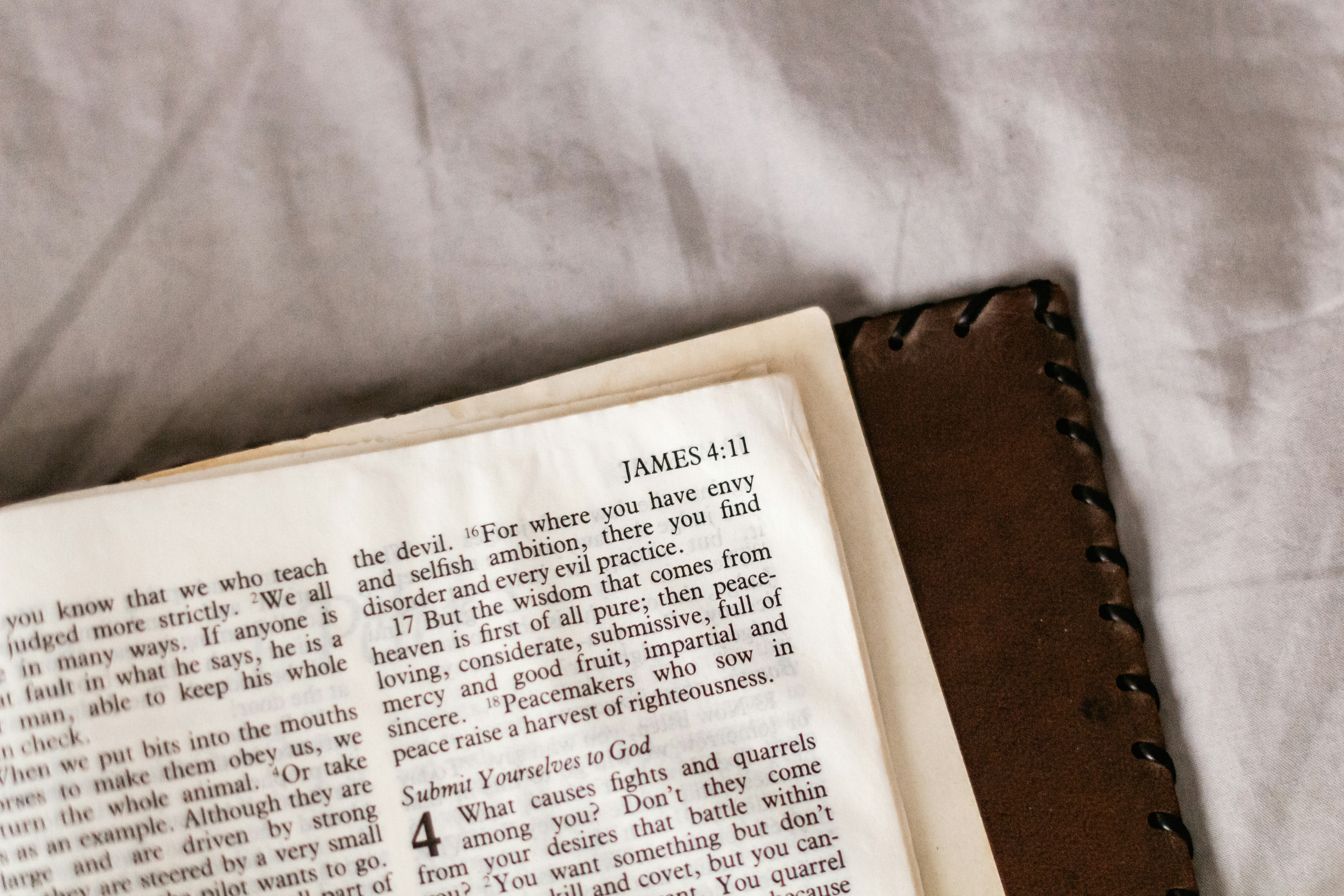
Read: James 1:19-27
Devotion: Right after telling his readers that every good gift comes from their heavenly Father who has given them salvation according to his good pleasure, James commands his listeners to be quick to hear and slow to speak (James 1:19). What’s the connection between James saying that God brought us forth by the word of truth to be a kind of firstfruits of His creatures and the command to be slow to speak and slow to anger?
Well, it seems like anger and an uncontrolled tongue was an issue among the Christians that James was writing to. He not only gives this brief correction against those sins, but he also comes back to these topics in chapters three and four as well.
The point that James is making here is that being quick tempered and not controlling their tongue (the latter being particularly difficult when you are angry), is not living according to the word of truth that had made them firstfruits. Rather, these believers are to put away those sins and humbly live according to that word that not only was the means of their salvation, but which is also the means of their sanctification.
There is a necessary link between being saved and living out the Word that saved us. There are many today who talk of ‘carnal’ Christians, who are those who can be considered Christians but who are wayward and living according to the passions of their flesh like the rest of mankind.
These so-called Christians may go to church every Sunday, if they go at all, but as soon as they leave church grounds and for the rest of their week, their lives look no different than the run of the mill unbeliever who sins abundantly and has no qualms about it. From their character to their words and actions, outwardly they show no signs of Spirit-empowered living and little to no evidence of God’s Word having any effect on their conscience and life.
These professing believers may have grown up going to Awana, and may have even memorized some Bible verses, but the consistent pattern of life is contrary to the commands and wisdom of Scripture.
James knows nothing of the so-called ‘carnal’ Christian. They do not exist. Rather, he says that such people have deceived themselves into thinking that they are Christians. At the very least, these professing believers can have no assurance that they are truly born again. Why? Because the Christian is not just a hearer of the word, but also a doer. The Christian can’t help but to be a doer of the word. The ones who hear the word but who are unchanged, they are like a man who looks at himself in the mirror and immediately forgets what he looks like after he looks away (James 1:24).
Though the Scriptures have done their job revealing the man’s need for repentance and salvation from the wrath of God through Christ, it doesn’t change the person who is a mere hearer. He may be convicted in the moment he reads it, but as soon as he puts his Bible down he goes and he lives exactly how he did before he had ever read it. The truth doesn’t change his actions, thoughts, or words.
But for the person who has been saved, who has read the Scriptures and in whom the Spirit has made alive, he can’t forget what he’s read. He’s like Christian in The Pilgrim’s Progress who, despite the protestations of his friends and family to forget what he read in the book, cannot let it go. He must follow the path told to him by Evangelist through the small wicket gate, to the cross of Christ, and then continue on it all the way to the Celestial City.
We cannot be mere hearers of the word. If we think that we’re religious, if we think we’re Christian, but we don’t live according to the commands of Christ, then we are deceived in heart, and our religion is worthless (James 1:26). Our works, our right living, do not save us nor do they secure our salvation. We are saved by grace through faith in Christ alone. But those who have been saved by grace will live like it (see also Titus 2:11-14).
How can those who have truly come to know Christ and the suffering He endured for the forgiveness of their sins ignore His words? They can’t. They will not be hearers only, but doers as well.
Ponder and Pray: As a family, discuss the difference between hearing and doing. What doesthat difference look like inwardly and outwardly? Finish by sharing prayer requests and praying for one another.