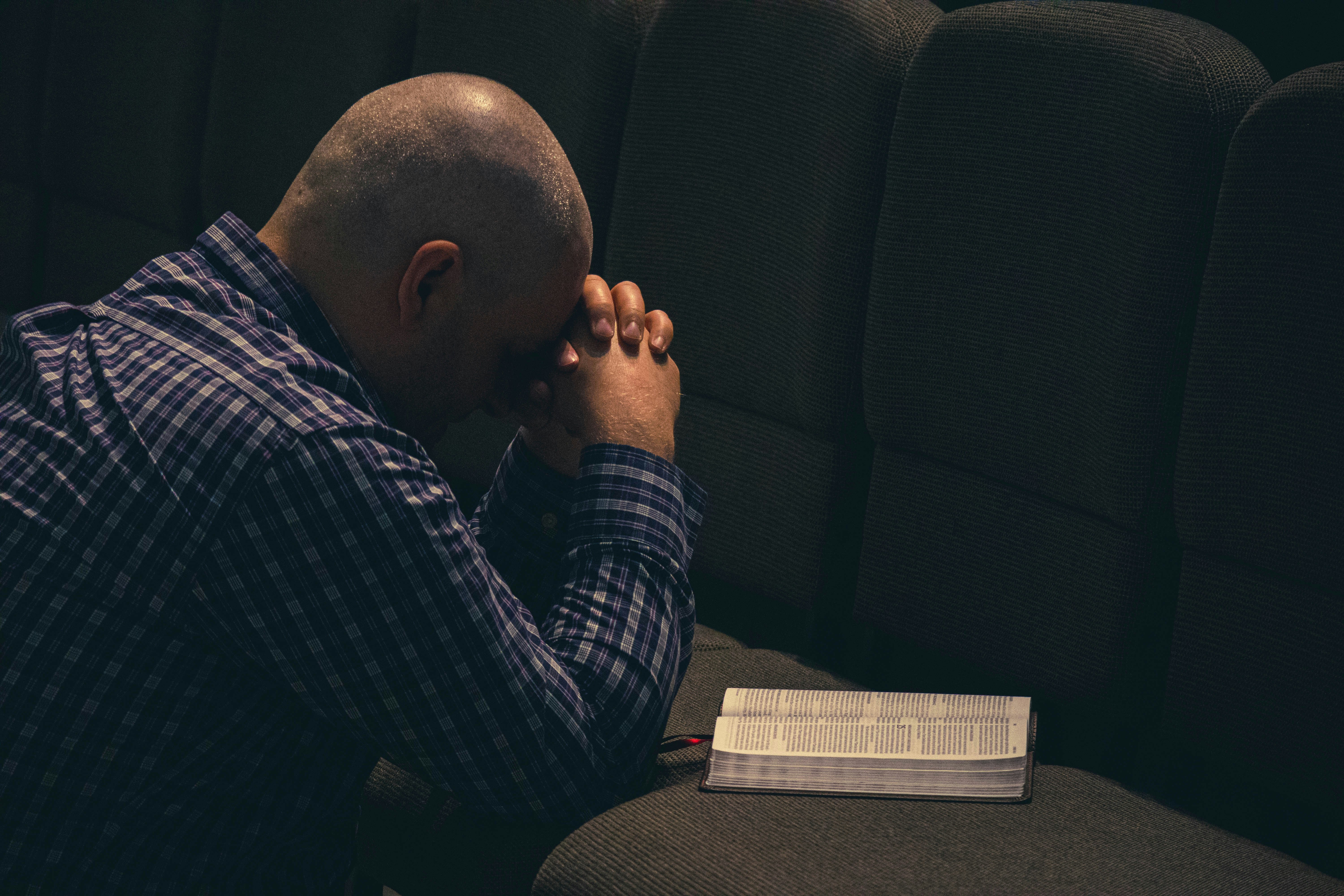
Desperation.
It’s not a place to which we naturally drift. No one I know is actively striving to get to a place of desperation. No, we prefer to have everything we need at our fingertips; to be comfortable, at ease, and self-sufficient.
The problem is that this natural tendency away from desperation toward self-sufficiency hinders faith in Christ. You can also say it this way: faith in Christ is born out of desperation. The Gospels attest to this important truth. Those who are enabled to believe in Christ’s power to save them are those who have come to the end of themselves and have nowhere else to turn. In a word, they are desperate, and that desperation leads them to trust in Christ alone for help.
Luke illustrates this truth repeatedly throughout his account of Jesus’ life. The leper pleaded with Jesus for healing, believing that Christ had the power to do so (Luke 5:12-14). The paralytic, unable to do anything for himself, trusted in Christ for healing, and he received both physical and spiritual deliverance (Luke 5:17-26). The centurion needed Christ to heal his servant, so he humbled himself before the Lord, declared his unworthiness, and received his request (Luke 7:1-10). The prostitute’s burden of sin compelled her to seek Jesus for forgiveness, and it was granted to her (7:36-50).
But Luke seems to make a special effort to highlight the connection between desperation and faith in his account of Jairus and the woman with a hemorrhage. In this account, we have two different people, from two very different circumstances, brought together by God’s providence to a common place of desperation.
Jairus’s Desperation
Jairus was one of the religious leaders in Israel and a ruler of the synagogue (Luke 8:41). This title meant that Jairus oversaw the logistics and organization of synagogue services. When he sees Jesus, however, his response is entirely unlike the typical response of Israel’s religious leaders.
Up to this point in Luke’s gospel, the Pharisees and scribes have made it clear they do not approve of Jesus’ ministry. It was at the commencement of Jesus’ ministry that they sought to kill him for preaching on divine election during a synagogue service (Luke 4:16-30). Jesus’ public proclamation of the paralytic’s forgiveness drew accusations of blasphemy from the Pharisees (Luke 5:17-26). Immediately after Jesus healed a man’s hand in a synagogue on the Sabbath, Luke reports that the religious leaders in attendance “were filled with fury and discussed with one another what they might do to Jesus” (Luke 6:11). One does not need to speculate to know that murder was on the table as a possible solution to their problem.
Jairus’ response to Jesus is the opposite of his fellow leaders. Luke says that “falling at Jesus’ feet, he implored him to come to his house” (Luke 8:41). Throwing oneself before Jesus was a risky, if not outright dangerous, move for this man. To go against the grain of the prevailing attitude toward Jesus was likely to upend his reputation with his fellow Jewish leaders and put his livelihood in jeopardy. Given the Pharisees’ willingness to kill itinerant rabbis, Jairus may have also been hazarding his own life. Why take such a risk? Luke tells us why: “For he had an only daughter, about twelve years of age, and she was dying” (Luke 8:42). Jairus was a desperate man, and Jesus was the only one in the nation of Israel who was healing the sick and raising the dead. Jairus was desperate, so he saw that Jesus was the only one who could help him. Faith was beginning to emerge in this unlikely man.
The Woman’s Desperation
Happily, Jesus yields to Jairus’ request and starts to make his way to his house, along with the crowd who had welcomed him back from the country of the Gerasenes (Luke 8:26, 40). On the way to Jairus’s house, however, we are introduced to another important character in the story. A woman who had a “discharge of blood” who had spent “all her living on physicians” was still in misery because no one could heal her (Luke 8:43).
Her bleeding was likely a uterine hemorrhage. This kind of ailment would have essentially curtailed her social life and disabled her from having children. Most importantly, her condition made her perpetually ceremonially unclean (Lev 15:19-30).
Luke’s note that she had spent all her living on physicians and was still afflicted by this debilitating ailment underscores her desperation. She has nowhere else to turn. While she still had money to pay another physician, there was a fragment of hope she could cling to. Now that the money is gone, hope has vanished. Her expectation for earthly joy has evaporated. She is utterly desperate.
Nevertheless, she believed that all she needed to do was touch Jesus’ garments and she would be made well (Mark 4:28). And that’s exactly what happened. The moment she touched Jesus, she was instantly healed: “She came up to behind him and touched the fringe of his garment, and immediately her discharge of blood ceased” (Luke 8:44). Without a word, restorative power flowed from Jesus to the woman and healed her hemorrhage.
Before we consider Jesus’ response, however, we need to note an important similarity between this woman and Jairus. It is no coincidence that the woman had suffered for twelve years with this hemorrhage, and Jairus’ daughter was twelve years old.
For the same amount of time that the woman’s life was beset by an embarrassing and physically depleting illness that kept her from corporate worship, Jairus and his wife would have enjoyed life with their daughter. It’s also possible that their daughter had been ill most of her life, and she is finally succumbing to her illness. Luke doesn’t say. What’s most important is the fact that, after twelve years, God’s providence has brought them both the woman and Jairus to a place of total desperation. The woman, in her great need, had reached out to Jesus and received healing.
Simple, Desperate, Saving Faith
Recognizing that power had gone out of him, Jesus stopped the crowd and asked who had touched him. Realizing that she could hide from Jesus, the woman, like Jairus a short while ago, fell down before Jesus. But she didn’t stop with merely throwing herself down before Jesus; she confessed everything, explaining to Jesus and to everyone else within earshot her motives and what had transpired. Jesus’ response was neither accusatory nor corrective. “Daughter, your faith has made you well; go in peace” (Luke 8:48).
The phrase translated “your faith has made you well” (ESV) is the same phrase that is translated “your faith has saved you” in Luke 7:50. The phrases in both passages are identical:
Your faith has saved you; go in peace (Luke 7:50)
ἡ πίστις σου σέσωκέν σε· πορεύου εἰς εἰρήνην.
Your faith has made you well; go in peace (Luke 8:48)
ἡ πίστις σου σέσωκέν σε· πορεύου εἰς εἰρήνην.
The Greek word σέσωκέν can refer to either physical healing or spiritual salvation. In Luke 7:50, the context indicates that it refers to spiritual salvation because Jesus said plainly that the woman’s sins had been forgiven (see Luke 7:48). Given the nature of the woman’s faith in Luke 8:43-48, and Jesus’ use of the exact same language in both accounts, we should conclude that the woman with the hemorrhage was physically and spiritually healed that day. This woman had saving faith.
But the joy of the woman’s healing is met with heartbreak for Jairus. While Jesus was pronouncing temporal and eternal blessings upon this woman, someone from Jairus’ house appeared with dreadful news: “Your daughter is dead; do not trouble the Teacher any more” (Luke 8:49). While his daughter was alive, Jairus had hope she could be healed. Now all hope is gone.
Closing the Door to All Earthly Hope
Imagine what you would have been tempted to feel at that moment. “If that woman had not delayed us, there may have been a chance. Had Jesus not stopped and talked to the woman, my daughter may still be alive.” We are not told what Jairus was thinking at that moment, but we are told what Jesus said to him: “Do not fear; only believe” (Luke 8:50). No rebuke. No scolding. Only encouragement.
From an earthly perspective, the door to hope was sealed shut. But from a heavenly perspective, hope was still very much alive. But by removing any earthly possibility for the little girl’s physical restoration, Jesus was intensifying Jairus’ desperation. But the escalation was good for Jairus, because it would enable him to lean on Christ all the more: “Do not fear, only believe.”
When they eventually arrive at Jairus’ home, they are met with mourners. Jesus tells the mourners, “Do not weep, for she is not dead, but sleeping.” The people laughed at Jesus because they knew the girl was dead. But Jesus was unwavering in his plan to show mercy to Jairus and his family. “But taking her by the hand he called, saying, ‘Child, arise.’ And her spirit returned, and she got up at once” (Luke 8:54-55). Jairus’ daughter was alive.
Luke’s aim in recounting these twin events in Jesus’ ministry (alongside the other events I’ve already mentioned) should be clear by now: true faith in Jesus is born out of desperation. When every door has been closed, and we are, from a human perspective, without hope of deliverance, our eyes have no place to land but upon Jesus Christ—the Savior who can do all things.
The Power of Weakness
It is counterintuitive, but faith is deepened, and our souls are strengthened precisely when we despair of our own strength and are desperate for Christ. Paul realized this very thing and was therefore happy to bear with weaknesses, “so that the power of Christ may rest upon” him (2 Cor 12:9). The opposite is also true. When we are self-sufficient, self-reliant, and not desperate for Christ, our faith is weakened, and our spiritual lives lose vitality.
The Church in Laodicea is an example of what happens when Christians yield to the natural tendency to rely on oneself. Jesus rebuked this church because they had become lukewarm. They were lacking spiritual zeal, love for Christ, and passion for the things of God. What was the solution? We might think that these Christians just needed to devote more time to ministry or evangelism. Perhaps they needed to implement more spiritual disciplines in their lives. Actually, the root cause of their spiritual apathy was self-sufficiency. In other words, they had lost a sense of desperation for the grace of Christ. The solution, therefore, would require a change precisely at that point.
I know your works: you are neither cold nor hot. Would that you were either cold or hot! So, because you are lukewarm, and neither hot nor cold, I will spit you out of my mouth. For you say, I am rich, I have prospered, and I need nothing, not realizing that you are wretched, pitiable, poor, blind, and naked (Rev 3:15-17; emphasis added).
The remedy for this church, then, was not to engage in more religious activity, but to repent of their self-sufficiency and see Christ as their only source of spiritual sustenance:
I counsel you to buy from me gold refined by fire, so that you may be rich, and white garments so that you may clothe yourself and the shame of your nakedness may not be seen, and salve to anoint your eyes, so that you may see (Rev 3:18).
The Christians in Laodicea had started to place their faith in who they were, what they owned, and what they could do, so their faith, once vibrant, began to wane. The answer was to turn back to Christ and rely solely upon him for all their needs, both physical and spiritual. This reliance upon Christ would renew their faith and spiritual vitality.
Jairus and the woman in Luke’s gospel are not outliers in the Bible. They represent the nature of true faith. Real faith in God is born of desperation. Sarah was barren, Israel was enslaved, David was on the run, Manasseh was deep in sin, Peter was sifted like wheat, Paul was beset by a thorn in the flesh and saddled with responsibilities that caused him to despair even of life (2 Cor 1:8-11). This is how God works: he places his people into impossible situations so that they might rely solely on him for all their needs.
While it may be uncomfortable, these seasons of desperation are good for our souls. They enable us to see that Christ is our all, and that apart from him, we can do nothing (John 15:5). Our justification, spiritual growth, sanctification, ministry fruitfulness—even our ability to obey—come from Jesus Christ (1 Cor 1:30-31). Not only that, but all of our physical needs are provided solely by the living Lord of the universe (Heb 1:3; 2 Cor 9:8). Times of intense desperation do not destroy our faith; they renew our faith and teach us again that we are wholly reliant upon Jesus Christ. May God help us to use these seasons to deepen our reliance upon our Savior.