In a previous article, we considered the serious danger of spiritual pride. In this article, we will consider five signs that we are becoming wise in our own eyes. My aim in this article is to help us, by the Spirit, expose our spiritual pride and repent of it.
We Neglect God’s Word
Throughout Israel’s history, God’s people were regularly rebuked for failing to inquire of the Lord for wisdom and guidance (Is 8:19; Jer 10:21; Hos 4:12; Zeph 1:6). Their refusal to seek out God’s Word often led to significant trouble for the nation and its leaders.
When a person (or nation) is becoming wise in his (or its) own eyes, such spiritual pride will be expressed primarily in an unwillingness—or simple neglect—to seek out God’s Word for help in thinking through important issues and decisions. Why? Because we believe we have sufficient wisdom to rightly discern the issues of life.
The creation account reminds us, however, that God never intended his image bearers to interpret life according to our own wisdom. Even before the fall, God gave Adam a divine word that by which he was to interpret his physical environment:
And the Lord God commanded the man, saying, “You may surely eat of every tree of the garden, but of the tree of the knowledge of good and evil you shall not eat, for in the day that you eat of it you shall surely die (Gen 2:16-17).
Yet, it was precisely when Eve used her autonomous judgment to assess her surroundings that she fell into sin.
So when the woman saw that the tree was good for food, and that it was a delight to the eyes, and that the tree was to be desired to make one wise, she took of its fruit and ate, and she also gave some to her husband who was with her, and he ate (Gen 3:6-7).
Eve evaluated her environment and made an important decision without the Word of God. As a result, she was deceived by appearances. Without the guidance of God’s Word, she was only able to see the tree’s external beauty and its potential to provide sustenance and moral knowledge. Using her own reason, untethered from divine revelation, Eve could no longer see that the tree was forbidden and would plunge her into eternal death if she ate from it. She had become wise in her own eyes.
Similarly, if we find ourselves regularly evaluating our lives, making important decisions, or discerning doctrinal issues without careful inquiry into God’s Word, we can know that we are, regardless of how we may feel, in the throes of spiritual pride. We are starting to become wise in our own eyes.
Scripture straightforwardly instructs us to trust in the Lord and resist the temptation to rely on our own understanding. Trusting in the Lord requires that we trust in his Word. When we begin to drift from his Word, we are, in that act, leaning on our own understanding.
Trust in the Lord with all your heart,
and do not lean on your own understanding.
In all your ways acknowledge him,
and he will make straight your paths (Prov 3:5-6).
Additionally, if we find ourselves dabbling in sin or putting ourselves in the way of temptation (Rom 13:14), we have started to become wise in our own eyes:
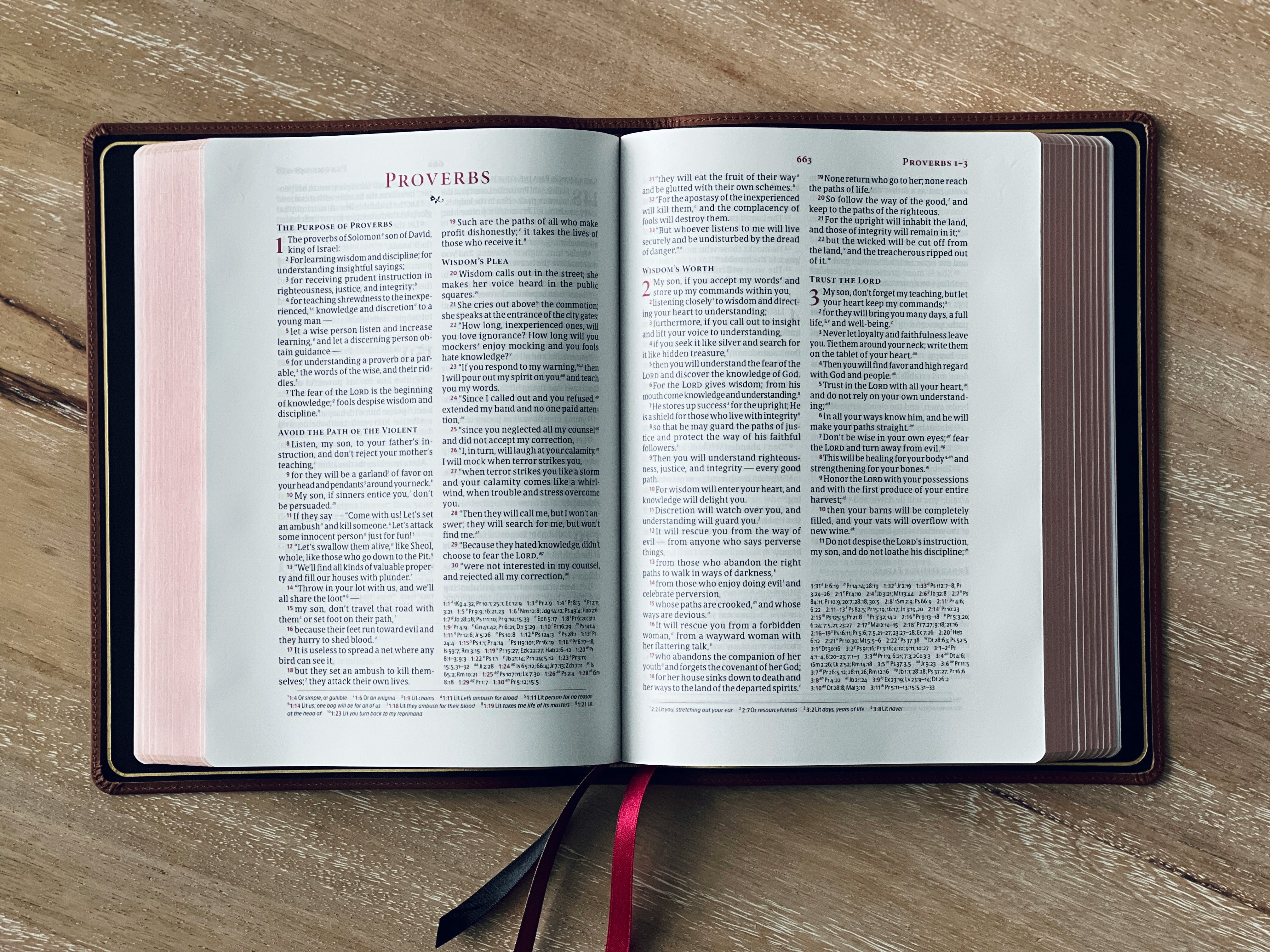
Be not wise in your own eyes;
fear the LORD, and turn away from evil.
It will be healing to your flesh
and refreshment to your bones (Prov 3:7-8).
A practical sign that we are becoming wise in our own eyes is our neglect to make hearing God’s Word a priority. We may leave off personal Bible reading, or we may no longer make Bible preaching a priority—either by failing to listen to sermons carefully and eagerly (cf. Acts 17:11), or by neglecting church altogether (Heb 10:24-25).
While we may not say it openly, the underlying reason for our neglect of this important spiritual discipline is that we don’t think hearing from God’s Word on a regular basis is vital to walking in wisdom (cf. Prov 2:1-8; Ps 19:7-11; 119:1-8; Matt 4:4). Such thinking is deadly. We have become wise in our own eyes, and we will find ourselves in great difficulty if we don’t repent and turn back in dependence to God and his Word.
We Resist Wise Advice and Counsel
A second sign that we are becoming wise in our own eyes is that we resist the advice of others. While direct reading and hearing of God’s Word are essential for growing in wisdom, it is also God’s design that we learn wisdom from other believers who are absorbing and applying God’s Word to their lives.
“The way of a fool is right in his own eyes,” Solomon reminds us, “but a wise man listens to advice” (Prov 12:15; see also Prov 19:15). The word “listens” indicates that the wise person gives careful attention to the counsel he receives and considers how he might implement it in his life.
Counter-intuitively, it is the truly wise man who is aware that he does not possess exhaustive knowledge or the ability to accurately assess every facet of a decision. Thus, he is open to the gift of wisdom that God offers through other people.
Throughout the Proverbs, instruction in wisdom is often facilitated through the corrective rebuke and insight of other saints (Prov 10:17; 13:1, 18; 15:5; 15:32). If we find ourselves bristling under such counsel, we can be sure that we are becoming wise in our own eyes.
This is a dangerous place to be. If we cannot learn from other people, especially when they correct us, we will stall spiritually and experience much unnecessary trouble in this life.
The truth is that we are finite, sinful, naturally short-sighted, and unable to see all the necessary factors of a decision or its entailments. We need God’s Word, and we also need God’s people to help us apply God’s Word.
We Don’t Seek Wisdom from Godly Saints
This third point is related to the second but distinguished by its focus on the necessity of proactively seeking wisdom. You may not consciously resist advice when people offer it, but are you making an effort to acquire wisdom from other saints who have more knowledge and more experience walking with God than you?
When a man, previously unexperienced in home remodeling, plans to renovate his master bathroom, he will, if he is wise and not unduly confident in his innate skills, aggressively seek wisdom from others. When a man is dehydrated, he will not passively wait for someone to bring him water—he will actively seek for it until his body is replenished.
When it comes to wisdom, it is not enough to merely appreciate it when God offers it through unsolicited advice; true humility is expressed when we seek out wisdom from other godly saints. If we are not regularly and proactively seeking wisdom from other believers, we are likely thinking too highly of our own wisdom.
We Don’t Listen to Qualified Teachers and Leaders
A fourth mark of spiritual pride is a growing resistance to the teachers and leaders God has placed in our lives. Teachers are gifts from Christ to his church for its spiritual benefit (Eph 4:12). While Scripture’s inherent clarity enables the believer to learn truth by simply reading it, spiritual growth, understanding, and discernment can only be sustained and grown through the ministry of teachers.
This is why Scripture tells Christians to, “Obey your leaders and submit to them, for they are keeping watch over your souls, as those who will have to give an account” (Heb 13:7a). God has placed leaders in the church for the good of its members. When we resist these qualified leaders, we do so to our soul’s peril, which is why the author of Hebrews continues his exhortation with this word: “Let them do this with joy and not with groaning, for that would be of no advantage to you” (Heb 13:17b; emphasis added).
A person in the mire of spiritual pride, however, will find it difficult to listen graciously to their spiritual leaders. Like Diotrephes, a person who is wise in their own eyes will reject legitimate teachers and leaders in the church (3 John 9). This rejection may begin small—a little disdain here, a little disrespect there—but it will grow if it isn’t confronted in its early stages. Left unchecked, this trajectory will eventually lead to distancing oneself from the local church.
We Isolate Ourselves from the Body of Christ.
When a person begins to isolate themselves from the body of Christ, it is a clear sign that they are becoming wise in their own eyes. Proverbs 18:1 says, “Whoever isolates himself seeks is own desire and breaks out against all sound wisdom.” Isolation is not only selfish; it inevitably leads to skewed judgment.
Over the past two decades of pastoral ministry, I have observed that, nearly without exception, whenever a Christian has isolated himself or herself from the local body of Christ, that person is characterized by self-righteousness, ensnared by unbiblical beliefs, and lacking in spiritual balance. These Christians talk as though they are the only true Christians in the world and that all other Christians are weak and compromised, if not downright fake. They hold to strange doctrines and are often combative and hyper-focused on one or two issues, lacking a whole-life and whole-Bible approach to their walk with Christ.
How did they get to this point? It began with spiritual pride. As they started to admire their own wisdom, they slowly turned away from the only place where wisdom grows: the local church. Sadly, such a problem only perpetuates itself. This person begins to think they are wiser than they really are, so they don’t see a need for fellowship, corporate worship, and instruction from qualified teachers.
No longer planted in the rich soil of the local church, fed by the Word of God, and nourished by the wisdom of the saints, this person becomes even more confident in their spiritual insights and holiness. Now, in their judgment, they are far wiser than the people in any church they might attend, so they distance themselves even more, removing themselves further from the place where they might be corrected and reclaimed.
If you are intentionally distancing yourself from the local church, you might try to justify your isolation with plausible-sounding reasons. The truth is that you are spiritually proud, and you need to repent, turn to Christ, and be restored to a sound local church.
Conclusion
Although born-again believers are recipients of new hearts and the indwelling Holy Spirit (Ezek 36:26; Gal 3:14), we are still susceptible to spiritual pride. When we find ourselves disregarding God’s Word, resisting advice, or failing to actively pursue wisdom, we can know that we are becoming wise in our own eyes. If we start to despise the qualified teachers God has placed over us, or if we neglect the church altogether, we can be certain that spiritual pride has taken root. If the Spirit has convicted you of any of these signs of spiritual pride, take some time today to repent, ask God’s forgiveness, and seek his grace to help you trust in him and to lean only on his wisdom.