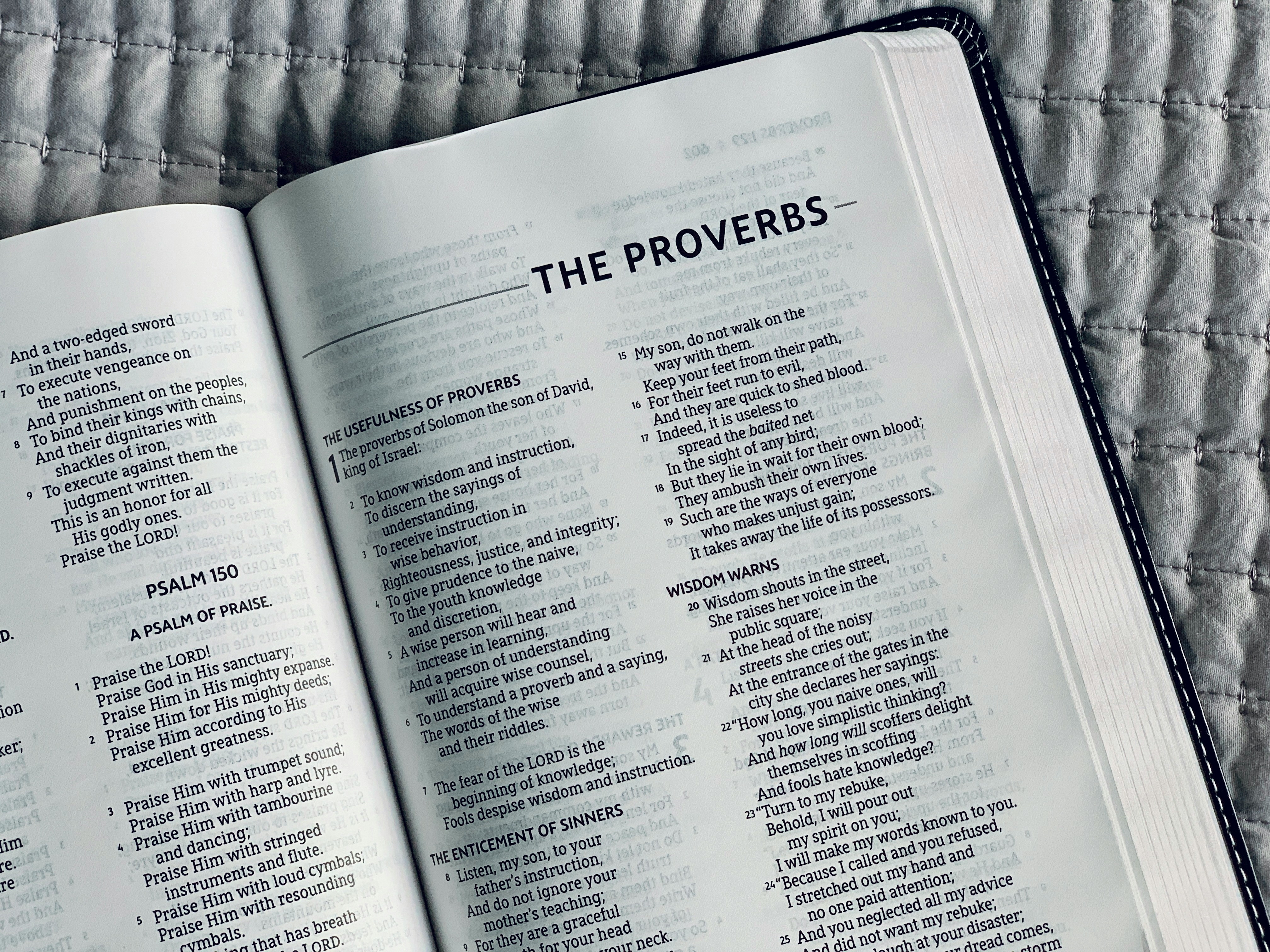
Reading the Book of Proverbs
Now that we have surveyed popular views of Proverbs 22:6 and established a literal translation, it is time for a brief word on how to read the Book of Proverbs. The popular and dominant view propagated by Bible teachers and even some “scholars” today says that the proverbs are just general truisms, not universal binding promises. For example, one popular author says, “the Proverbs are wise sayings and truisms—not necessarily inviolable rules” and as such, “Proverbs 22:6 is not a promise for Christian parents to claim that will guarantee their children will never depart from the way of truth.”1
As mentioned earlier, it is overstating the case to say that all the proverbs in the Book of Proverbs are the same and should be treated accordingly. Pigeon-holing and conflating all 900-plus proverbs illegitimately neutralizes all of its remarkable literary diversity and versatility.
The Book of Proverbs is made up of many kinds of different proverbs and sayings, written by different authors, under varying conditions, at different times in Israel’s history. A brief survey clearly reveals the great diversity of the book, as it is composed of at least five different units.
The first unit includes chapters 1-9, which are discourse oriented, tending to be longer poems written from a father to a son. One author notes, “These discourses differ markedly from the two line aphorisms people usually associate with proverbs.”2 The second unit covers 10:1-22:16, made up of the traditional two line aphorisms. This section is attributed to Solomon (970 BC). There are roughly 375 couplets in this section, which is the heart of the book. Each couplet stands on its own structurally and the defining feature is Hebrew parallelism, where the first line is advanced by the second line. The third unit includes 22:17-24:34 and is called “the sayings of the wise.” This unit is different in style than Solomon’s couplets, as many of the sayings are extended beyond two-line proverbs. The fourth unit covers 25:1-29:27 and is credited to the time of Hezekiah (700 BC). The fifth unit includes the last two chapters which are attributed to Agur and Lemuel, and have their own unique literary styles.
When reading a proverb, the reader needs to be aware of what section of the book they are in and needs to meditate on the individual proverb in light of its immediate context. Each of the couplets written by Solomon in chapters 10-22 stand alone. Some are general truisms; some are universal truths; some are basic warnings; some are indicatives or simple assertions of reality; and some are imperatives or commands. Proverbs 22:6 is an imperative which is its distinguishing feature that needs to be considered by the intended audience, which is believing parents.
Applying Proverbs 22:6
In light of all the foregoing it is now time to apply this classic parenting verse. The principles of application here suggested flow from the updated translation of the Hebrew text given above, which, again, is as follows:
Dedicate a young child according to his way,
and when he is much older he will not turn away from it.
Keep It Simple
The first principle to consider regarding its application is to understand that it is a one sentence couplet composed of only eleven Hebrew words and is self-contained. Being self-contained means it stands on its own. So, when you read it, keep it simple. It is meant to be read by itself and meditated upon. And as a one sentence proverbial couplet, like a parable, it conveys one main truth. Take it at face value and don’t try to infuse it with more than Solomon wanted to convey. The main truth is that parents have an obligation toward their children. The main truth is not how to secure eternal salvation for your child by some unstated parenting methodology. You can’t milk it for more than is there, in futility trying to develop a comprehensive philosophy of parenting. This proverb contributes only one plank in the vast structure of a parenting philosophy. Its main, plain, surface truth is that parents are commanded to dedicate their children to God when they are young in a comprehensive manner, doing all things in parenting in keeping with God’s way of truth, and if you discharge that duty faithfully, then it will have a long-term influence on the child.
Remember the Command
The second principle to keep in mind when meditating on Proverbs 22:6 is to remember that it is a command, for the lead verb is an imperative. Believing parents have a duty from God with respect to their young children. Here God gives a parental charge, and the parents are expected to obey. And as is true with all of God’s commands to His people, He gives them the resources to follow through successfully. As mentioned previously, this is the main point of the proverb. It is a parental command to be obeyed and fully discharged.
The Action is “Dedicate”
The third principle to consider with applying this verse is with respect to the translation of the main verb. The specific command to parents is “to dedicate.” Because the King James translation reigned supreme for so long, this is probably the most eye-opening principle to consider. We saw that the Hebrew verb is chanak and is used four other times in the Old Testament, and in those instances it is translated as “dedicate.” Its related noun form is used twelve times in the Old Testament and is always translated as “dedication” or a related form. So, there is no good reason to translate the verb as “train” in Proverbs 22:6.
Using the verb “train” does not do justice to the verb chanak. “Train” is too narrow, focusing only or mostly on teaching, whereas, “dedicate” is broader, more inclusive and holistic. “Dedicate” includes teaching, but is not limited to teaching. “Dedicate” has a broader reach. It is all-encompassing, as it inherently includes internal attitudes, not being reserved for only external methods as didactic teaching tends to be. Teaching is a one-dimensional enterprise, emphasizing the delivery of information. “Dedicate” includes the heart attitude as the prerequisite to all following methods and behavior with respect to parenting the young child. When Solomon “dedicated” the Temple, the point of emphasis was reverent devotion and exaltation toward the Giver of gifts, the gift being the Temple. As a gift from God, the Temple was also a stewardship responsibility of the people of Israel, especially the King, Solomon, and the priesthood. So, also are children a gift from God to parents and a stewardship responsibility of the parents (Ps 127:3). The parenting task needs to have at its foundation single-minded devotion and adoration toward God, the great Gift-giver (James 1:17).
When Solomon was commanding parents to dedicate their young children to God it is likely that he had some specifics in mind from his day to inform this responsibility. An obvious scenario that comes to mind from the era of Solomon is when Hannah dedicated her young child, Samuel, to God. Hannah was married and barren for a time. She knew that God was the author and giver of life. Only YHWH could open the womb. She pleaded boldly with God continually asking for a child from Him:
She, greatly distressed, prayed to the Lord and wept bitterly. She made a vow and said, “O Lord of hosts, if You will indeed look on the affliction of Your maidservant and remember me, and not forget Your maidservant, but will give Your maidservant a son, then I will give him to the Lord all the days of his life, and a razor shall never come on his head” (1 Sam 1:10-11).
Before she conceived, Hannah already had an attitude of “dedicating” her child to God. She knew that as a parent, she would be a mere temporary steward of the life God had entrusted to her. God answered Hannah’s prayer, as she conceived and gave birth to a son. Again, she wholeheartedly dedicated the young child (na’ar) back to God, as “she named him Samuel, saying, ‘Because I have asked him of the LORD’” (1 Sam 1:19-20). From the child’s birth onwards, Hannah was committed to continually dedicating her beloved child back to God, knowing ultimately his soul belongs to the Creator. As the boy grew, she verbalized the priority and importance of dedicating her son to God, as she spoke to Eli the priest at the tabernacle:
For this boy I prayed, and the LORD has given me my petition which I asked of Him. So I have also dedicated him to the LORD; as long as he lives he is dedicated to the LORD.” And he worshiped the LORD there (1 Sam 1:27-28).
Immediately following this event Hannah prayed to God, once again dedicating the child, and herself, completely to the sovereign care of God. Hannah’s prayer in 1 Samuel 2:1-10 is one of the most stunning and profound prayers in all of Scripture. Hannah dedicated herself and her young son Samuel to God, completely and unreservedly. Samuel would grow up to be used by God as a leader in Israel, and would one day anoint David as king. King David was Solomon’s father. Solomon, no doubt, possessed the written account, as well as the vivid spoken memories from his father, of Hannah’s exemplary attitude and actions of what it means to be a reverent and responsible steward over the children entrusted to her care.
Hannah’s dedication of her young child was not a one-time transaction. It was all-inclusive and ongoing. “Dedication” is a mindset, framework, and worldview in which faithful parents teach, train, discipline, model, shepherd, love and discharge the fullness of all their parenting duties. Understanding the mandate of Proverbs 22:6 as “dedicate” instead of “train” does not negate the importance of properly teaching and disciplining children. In fact, the opposite is true. Parents need to diligently teach, train, and discipline their children to the full because they have dedicated their children completely to God from the time they are in the womb, holding on to no self-serving agendas as parents. Christian parents too often short-circuit the parenting process by allowing personal agendas or vendettas to leak in or intervene, such as when the parent wants the child to pursue a certain course in life that may not be God’s choosing or God’s “way” (derek). The mandate for parents to wholly “dedicate” their children fully to God should help guard against any illegitimate micro-managing tendencies or usurping idolatrous idiosyncrasies that plague many parents.
Earlier it was noted that The Living Bible translates the first phrase of Proverbs 22:6 as, “Teach a child….” And we explained why that is misleading. The Living Bible is a paraphrase that was not based on the original languages of the Bible, but instead was trying to make the old English more accessible to the modern-day reader. The fact that it rendered the King James, “train” as “teach” shows that when people read or hear the word “train,” they think it means “teach” first and foremost. Hence the importance of understanding the better translation of the verb chanak as “dedicate.” That changes the entire paradigm. In light of this consideration, to close out the practical benefit of understanding the main imperative in 22:6 to be “dedicate” as opposed to “train,” consider the following implications of how these two verbs inform our attitude about parenting priorities:
- “Train” focuses on what I do; “dedicate” focuses on what God deserves
- “Train” focuses on external methods; “dedicate” focuses on inner attitudes
- “Train” focuses on the child; “dedicate” focuses of the responsibility of the parent
- “Train” is one-dimensional; “dedicate” is holistic
- “Train” is primarily pedagogical; “dedicate” is doxological but includes pedagogy
- “Train” looks down to the child; “dedicate” looks up to God
Practical Parenting
The fourth principle to consider when reading Proverbs 22:6 deals with the challenging second phrase that stumps many, “and when he gets older he will not turn away from it.” Two things to keep in mind help keep the balance. First, this verse is not promising salvation to a child because of parenting methods without consideration of the doctrine of election. Election is true and is God’s side of the salvation process. This verse is emphasizing the human side of the salvation process, a process that God sovereignly oversees and even orchestrates. But He does choose to use human means to accomplish His divine ends. God does choose to use the faithfulness of many parents to bring their children to Himself. There are exceptions, but that is the most common means of positively influencing children illustrated in the Bible. And that is the common testimony of saints throughout the ages, as they get older and testify how the godly influence of their parents made an indelible impression in their walk with God. Second, this verse is not addressing any exceptions to the rule. It is a straightforward command with a promise, similar to the 5th commandment (cf. Eph 6:1-3). If the preconditions are met, then the Divine promise follows. Parents who faithfully discharge their parenting duties by dedicating their children to God can be assured and confident that they did what God required…and they are to trust God with the long-term results. Good parenting can be achieved. Beware the skeptics who turn this verse on its head or undercut its positive flair. Virtually any command with a promise in Scripture can be viewed in light of the exceptions to the rule. But that is the wrong way to read such promises. We are to be faithful and take God at His Word.
Regarding this fourth principle, it is hard to improve upon the concise and potent summary written by a godly saint from centuries ago who comments on it as follows:
A good reason for it, taken from the great advantage of this care and pains with children: When they grow up, when they grow old, it is to be hoped, they will not depart from it. Good impressions made upon them then will abide upon them all their days. Ordinarily the vessel retains the savour with which it was first seasoned. Many indeed have departed from the good way in which they were trained up; Solomon himself did so. But early training may be a means of their recovering themselves, as it is supposed Solomon did. At least parents will have the comfort of having done their duty and used the means.3
Conclusion
Proverbs 22:6 is considered by many to be a key parenting verse and at the same time it is frequently a stumbling block. It seems to make a promise that often does not come true for parents, namely, that if believing parents teach proper Bible doctrine to their children, then the children will be saved as adults. This chapter proposed that that is not what Proverbs 22:6 intends. Instead, we argued that the focus is on the parental mandate and not on the child’s ultimate destiny. This view results from understanding the Hebrew properly as reflected in an updated literal translation which reads as follows:
Dedicate a young child according to his way,
and when he is much older he will not turn away from it.
The main verb in the sentence is an imperative, a command directed at parents. And that command is “to dedicate.” It is not the common understanding of “to train” or “to teach” as the King James renders it. The verb “dedicate” occurs five times in the Old Testament and four of those times it refers to a building, including Solomon’s Temple, being dedicated and consecrated to God. Parents are to likewise dedicate and consecrate their young children to God, recognizing that He is the ultimate Gift-giver, and that children are temporary stewardship gifts entrusted to parents. Parents are to guide and love their children in God’s ways, not in any self-serving ways. Parents who faithfully discharge this calling are promised that such parental investments will result in fruit that bears out as the child grows old. Faithful, believing parents can have confidence in their parenting as they entrust the long-term results to God’s sovereign care.
NOTES
1John MacArthur, What the Bible Says About Parenting (Nashville, TN: W Publishing Group, 2000), 17-18.
2David Finkbeiner, “Proverbs” in The Moody Bible Commentary (Chicago: Moody, 2014), 884.
3Matthew Henry, Commentary of the Whole Bible, Vol. III (McLean, Virginia: MacDonald Publishing Company, n.d.), 917.
This article was adapted from a chapter in a forthcoming book on parenting from With All Wisdom Publications.