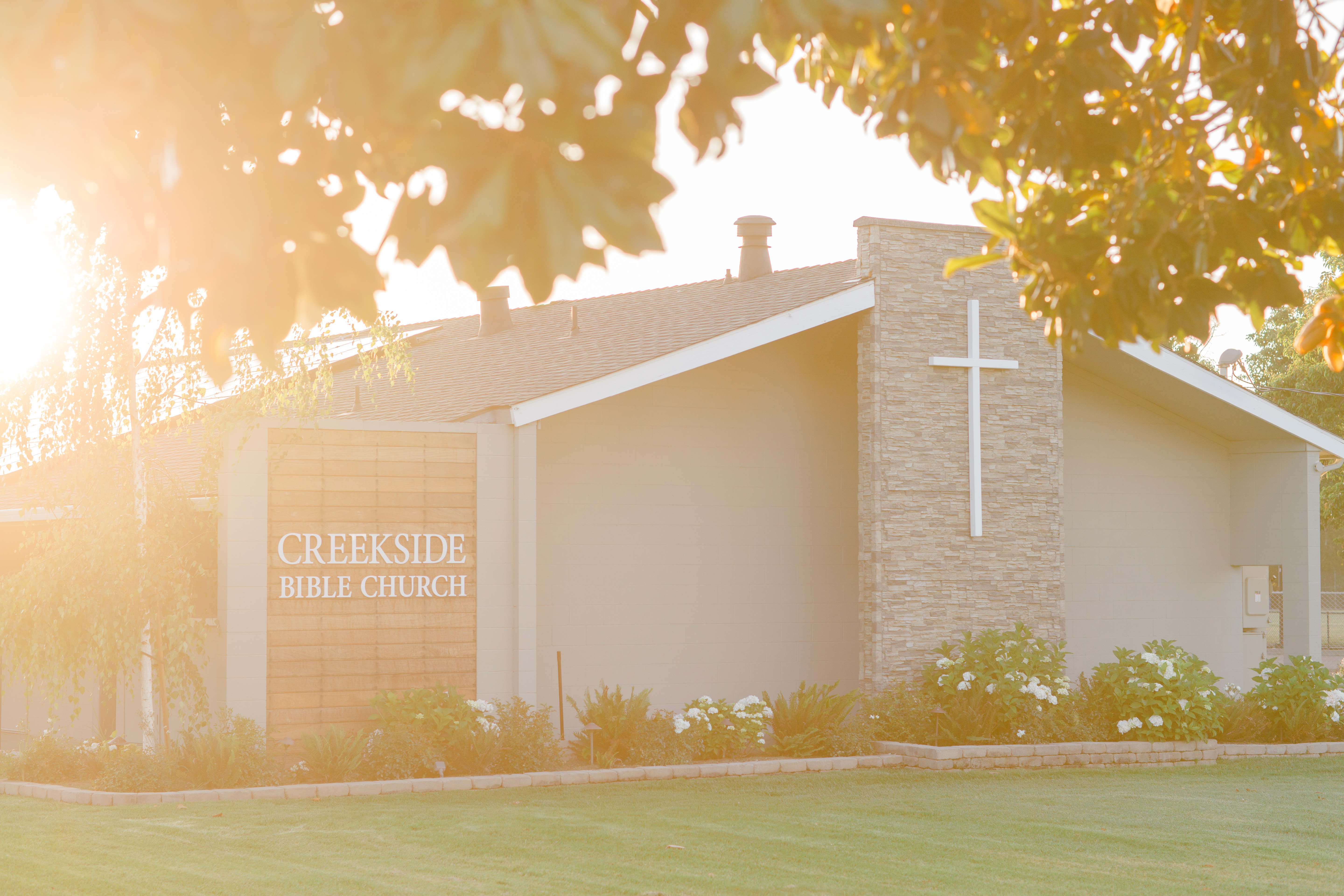
People interested in joining our church frequently ask us if we are Southern Baptist. Technically, we are affiliated with the Southern Baptists. That means a lot of different things to different people, both positive and negative.
Interestingly, if you read our church website you won’t find much information about us being Southern Baptist. That is because first and foremost we are a biblical church, a local church identified with Jesus Christ, the Savior and Head of the church (Eph 5:23). The church is not a human institution. It is of divine origin.
Baptist Distinctives
In light of the above question, a survey of what it means to be Southern Baptist would prove helpful. Currently there are more than 40,000 Southern Baptist churches in America, with over 13 million people. At the national level is the Southern Baptist Convention (SBC) that hosts an annual meeting.
On a smaller scale, the states have their own Southern Baptist Conventions, which is the level in which our church participates. As for the distinctives of what it means to be a Baptist, I highlight three of the main ones. The first Baptist distinctive is local church autonomy. Southern Baptist is technically not a denomination in the traditional sense. Being Southern Baptist is more of an “affiliation” or “convention” of churches than it is a denomination.
An affiliation is a flexible, voluntary, mutual, but formal partnership between likeminded individual local churches with the goal of advancing the gospel of Jesus Christ. In contrast, a “denomination,” typically understood, is more of a monolithic top-down, autocratic, closed system of hierarchy and bureaucracy, such as Presbyterian, Lutheran, or Methodist denominations, whereas Baptist churches champion local church autonomy or local church independence.
Instead of being dictated to by a distant, regional autocratic body or committee outside of the local church, Baptist churches operate and are led by their own in-house church leaders, the pastors or elders. Local churches being led by a plurality of local elders is the clear New Testament model and mandate (Acts 14:23; Titus 1:5).
Second, the Baptist distinctive of local church autonomy rests on another distinctive, and that is the complete sufficiency of Scripture. Other denominations may claim to believe in biblical sufficiency, but in practice they undermine it by incorporating and requiring other sources of authority by which they function.
In other words, their ecclesiology is informed by more than just the Bible. Their extra-curricular sources of authority may include tradition, church creeds, church confessions, and other man-made power structures. As a result, many traditional mainline Protestant denominations have ruling authorities over and above just the Bible. For example, Episcopalians have their “synods” and “vestries,” Presbyterians their “synod” and “general assembly,” Nazarenes their “districts,” and Methodists their “District Superintendent.”
These various bodies of authority are outside the local church and supersede the autonomy of the local church. And more importantly, none of them are warranted by Scripture. They are man-made authority structures; they are not in the Bible. A local church in the Nazarene denomination cannot hire their own pastor–they need permission from power-brokers outside their local church at the off-site Nazarene headquarters. In contrast, Baptists believe the Bible teaches that local churches can appoint their own pastors and elders.
A third important distinctive of Baptists is believer’s baptism. Baptism is not a second-tier doctrine or a tertiary matter as some Christians claim. Baptism is at the heart of the Great Commission, the driving mandate of the mission of Christ’s Church.
Before ascending into Heaven Jesus told His disciples, “Go therefore and make disciples of all the nations, baptizing them in the name of the Father and the Son and the Holy Spirit” (Matt 28:19). This is the Great Commission; the last directive Christ gave to His followers. Those who heard Him all knew what “baptizing” meant. And the apostles obeyed Christ’s mandate. Baptism was the act of immersing a Christian in water as an outward symbol showing the believer has been washed clean from sin by believing in Christ’s gospel.
Only those who have been born again were the ones baptized in the early church. There is no biblical warrant for infants being baptized. There are no examples nor commands in Scripture of babies being baptized; babies cannot understand and believe the gospel, nor can they repent of their sin. The New Testament prerequisite to baptism is to repent of sin and believe in the gospel (Acts 2:38, 41). The Ethiopian eunuch got baptized as an adult, and only after he clearly understood the meaning of salvation in Christ (Acts 8:30 ff.).
Lutherans, Presbyterians, Methodists, Episcopalians (Anglicans), many Reformed churches, and various Congregational churches all baptize infants. They inherited this illegitimate practice from the Catholic Church. Churches that baptize infants unwittingly countermand Christ’s mandate to baptize only believers.
This means that when the baptized infants grow up and become born again later in life, they will not get baptized again by their church after being saved. The result is that in these denominations the vast majority of Christians have never been baptized since being saved. They were baptized as infants, not as born-again believers. As such, they are unbaptized Christians. And there are countless millions of them.
The Benefits of Partnering with Southern Baptists
Because Baptist affiliation is a mutual partnership protecting local church autonomy, our church is not micro-managed by some outside governing body. Our church can disassociate with the Baptist organization at any time. Our current affiliation with the Southern Baptist body of believers is at the state level (California) and is based on our like-mindedness in theology and philosophy of ministry as delineated in The Baptist Faith and Message (2000).
Some misunderstand the meaning and intent of the phrase “local church autonomy” or local church independence. It does not mean that each local church is an island, interested only in doing their own thing and eschewing accountability from other Christians and churches. Being affiliated with the Baptist organization is a bona fide partnership with inherent accountability as well as fellowship and interdependence.
The Southern Baptist organization exists to pool resources together with like-minded churches to complement one another and enhance each church’s reach, opportunities, and influence. Today the Southern Baptist Convention maintains 11 permanent ministry organizations to execute the mission in needed areas.
Most local churches are small with limited resources, dependent solely on the free-will offerings of their local members. Churches are not receiving federal aid from the government like some non-profit 501c3 organizations. As a result, the average small church could use help from other local churches in various areas. This is the kind of help the Baptist affiliation seeks to provide.
Our church benefits from the resources the Southern Baptists provide in the practical side of church operations. The organization (headquartered in Fresno, CA) provides professional help for current best practices in church HR and areas of finance including banking solutions, capital expenditures, loan options, accounting, insurance, etc.
They offer guidance and help to pastors in retirement options, estate planning and more. They assist with and provide platforms for missions opportunities, compassion ministries, and church planting. They also assist, financially and in other ways, seminary students as they prepare for ministry.
Each local church is not obligated to participate in all the foregoing, but all those options are available as needed. Our local church has been blessed by many of these resources which continue to enhance our ministry.
Moving Forward
Much of the current bad press and controversy surrounding “Southern Baptists” is at the national level with the Southern Baptist Convention (SBC). Our church partners with Southern Baptists at the state level, not the national level, and as a result the ongoing national controversies do not impact our local church. If leaders of the SBC at the national level veer off course and formally undermine its current stated affirmations of biblical theology and philosophy of ministry, our local church would be compelled to disassociate with the organization. To date that has not happened. In fact, there have been two positive movements, beginning in the 1970s and then again in the 1980s, calling the Southern Baptists back to their roots of true biblical fidelity. We hope that trend continues moving forward.