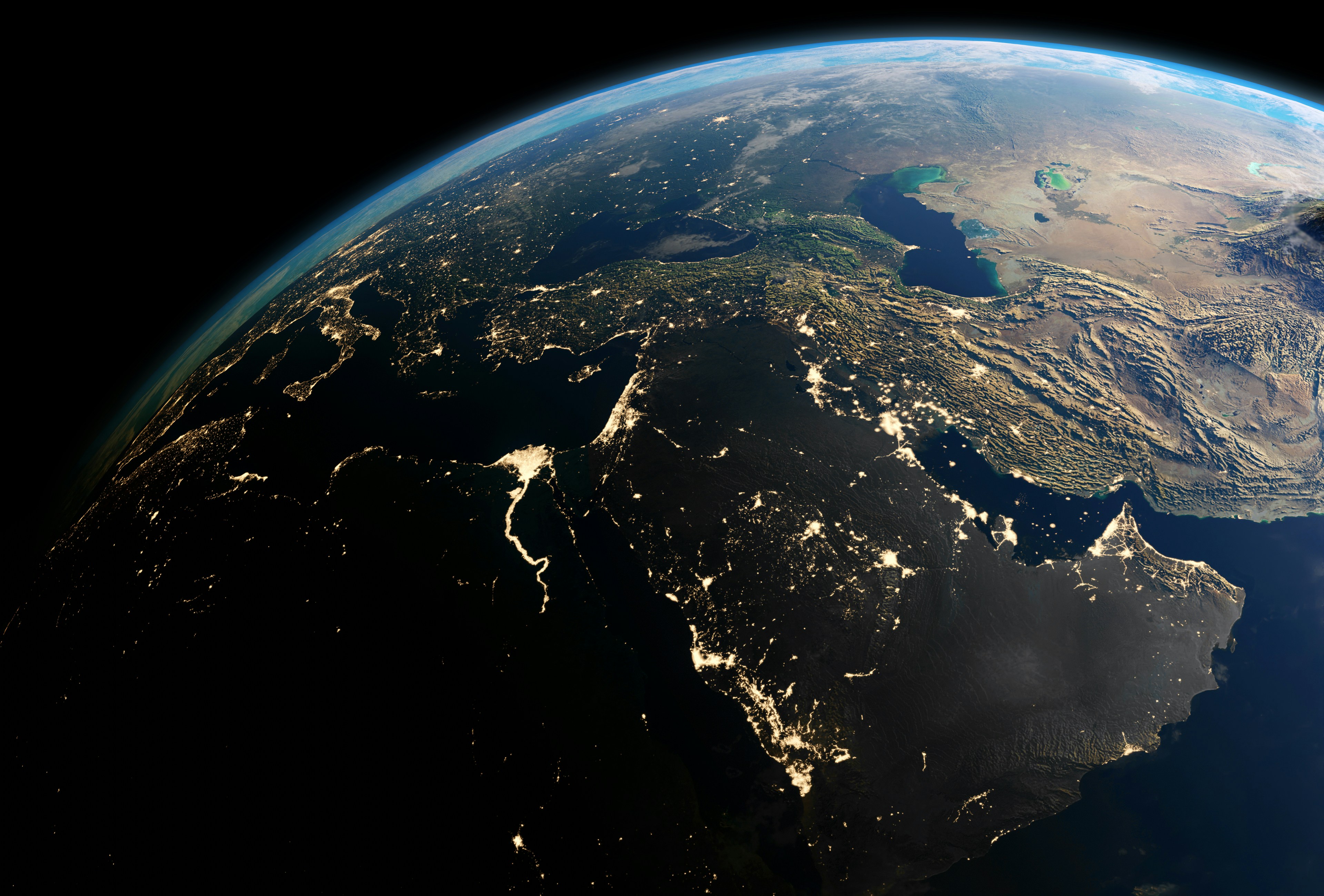
Many think of conservationism—the public protection of land and natural resources—as simple prudence. We should not waste what we have, and we should take care of the land God has given. Few would object to that. But conservationism as it actually operates is something more. It forbids anyone to settle and cultivate vast tracts of federal and state land, and behind it lies the conviction that while humanity might develop some land for good, man must be kept from subduing all the land that God has given. That conviction is a kind of misanthropy, a distrust of mankind itself, as though man were a threat to the world rather than the one it was made for. But any who have read the first chapter of the Bible know God’s charge to man: “fill the earth and subdue it.” Misuse is certainly possible, but man’s cultivation of creation is not a blight to be contained. It is the very thing creation was made to receive.
The Dominion Mandate and Individual Property
Here is the whole verse:
And God blessed them. And God said to them, “Be fruitful and multiply and fill the earth and subdue it, and have dominion over the fish of the sea and over the birds of the heavens and over every living thing that moves on the earth.” (Genesis 1:28)
Dominion is the language of kings. God rules over all things (“In his hand are the depths of the earth; the heights of the mountains are his also,” Ps 95:4), and having made man in his image, he made him to rule under him as his representative. That rule is delegated, but it is real, as Scripture elsewhere confirms: “You have given him dominion over the works of your hands; you have put all things under his feet” (Ps 8:6), and “The heavens are the LORD’s heavens, but the earth he has given to the children of man” (Ps 115:16). The command to multiply and the command to subdue come in the same sentence: the earth is to be filled with people, and those people are to subdue it.
This dominion establishes property. To have dominion over a thing is to have the right to use it and dispose of it as one sees fit, that is, to own it. Dominion, in other words, is ownership. God established it by both decree and the design of creation itself. Man must eat in order to live, and in its consumption, the food one eats can no longer be shared with another. Note that in the very next breath after giving man dominion over the earth, God gave him that which grows from the earth as food (Gen 1:29). In other words, unlike the angels who have not been granted this dominion, man’s own nature of physical needs requires he have a capacity for exclusive ownership, property. This is confirmed by the eighth commandment, “You shall not steal” (Exod 20:15), which would be meaningless apart from some things belonging to one man and not another.
This dominion is individual, not merely collective. It would be a misreading to take the dominion given to man (Hebrew, adam) as belonging only to mankind rather than to individuals, such as Adam himself. Many consider the property rights of individuals to be granted by the civil government, a public trust administered by those so appointed. Though kings have a form of dominion, an authority over the land derived from those under their rule, their dominion is not so absolute as to undermine the individual’s dominion. For example, when Ahab wanted Naboth’s vineyard, he had no authority to take it or even to compel its purchase (1 Kgs 21:1–4). While some civil authorities may act with impunity, in the divine court, they have no immunity from the command not to steal.
This dominion is acquired by subduing. Each material thing begins held in common among all mankind and passes into individual ownership the way Genesis 1:28 describes: subduing. A man clears the field, fences the pasture, digs the well, or tames the animal. The technical term for a fresh cultivation that establishes ownership is “homesteading.” A man cannot simply declare something to be his own just because no others have done the same. For example, Columbus could not claim all the Americas by sighting their shores. Dominion comes by subduing; ownership comes by work. When Abimelech’s servants seized a well, Abraham gave him seven ewe lambs “that this may be a witness for me that I dug this well” (Gen 21:30). Digging it made it his.
This dominion implies a duty, not merely a right. Genesis 1:28 is a command, not merely a permission. Every man is called to work, to increase what is under his hand, and to leave something behind: “A good man leaves an inheritance to his children’s children” (Prov 13:22). The thief is told not merely to stop stealing but to labor, “so that he may have something to share with anyone in need” (Eph 4:28). That does not mean every person must venture to homestead new land, but certainly some should if man is to “fill the earth.” The command that immediately precedes it provides a helpful comparison. “Be fruitful and multiply” binds mankind, yet each person fulfills it differently. No one may fulfill it by sinful means (fornication) and some are to forgo it (celibacy) for the sake of the kingdom (1 Cor 7:7), yet no one should conclude from this that God’s blessing on children has come to an end or that a government which forbade it would be just. The same is true of taking dominion by subduing the earth: the command and blessing continue.
Conservationism and Anti-Natalism Compared
Anti-natalism is the conviction that bringing children into the world does more harm than good, whether to the children themselves or to a planet that supposedly has too many people already. In its popular form, it is the panic of Paul Ehrlich’s The Population Bomb (1968), which warned that hundreds of millions would starve to death in the 1970s. But Ehrlich was only updating an older argument. In An Essay on the Principle of Population (1798), Thomas Malthus, an English clergyman, reasoned that population grows geometrically while food grows only arithmetically, so that mankind must always press against the limits of the earth until famine, disease, or vice cuts it back. Since Malthus wrote, the world’s population has grown from about one billion to about eight. Population growth has indeed slowed, but whatever one credits for the slowing, it is not famine. Overall, the food available to each person has only increased.
In its most brutal form, anti-natalism is enforced by the sword. For example, from 1980 to 2015, China’s one-child policy imposed its limit through fines, forced abortions, and sterilizations. India’s Emergency of 1975–77 sterilized millions of men, many under coercion. Today it is usually quieter: couples who forgo children “for the planet.” Christians rightly see all of this as hostility to God’s blessing. Children are not a burden on the earth; they are “a heritage from the Lord” (Ps 127:3), and the first thing God said to mankind was “Be fruitful and multiply” (Gen 1:28).
Of course, the verse that commands “be fruitful and multiply” also includes the command to “fill the earth and subdue it.” If the Christian should oppose the use of government power to restrict the introduction of new persons to the earth, should he not also oppose the use of government power to restrict the creation of new estates? Conservationism, in its most common forms, bears a marked likeness to anti-natalism. Both are misanthropic. Each treats man as an intruder on creation rather than the creature it was made for. And just as anti-natalism at its worst restricts procreation by the power of the sword, conservationism restricts the filling and subduing of the earth by the same.
From Nevada to the Moon
If dominion comes by subduing, then a supposed ownership of land none has cultivated in any measure is no ownership at all. If Columbus could not claim the Americas by sighting their shores, then no one can claim millions of acres by drawing lines around them on a map. Yet that is exactly what our governments have done. The federal government holds roughly 640 million acres, about 28 percent of all the land in the country, and the states hold close to 185 million more. Together they own about a third of the nation, more than half of the eleven contiguous western states, and more than 80 percent of Nevada and of Alaska. Most of that land has never been settled, and federal law means to keep it that way.

It was not always so. For most of American history, settlers took up land by working it: first by settling and improving land without formal title, then under preemption laws that let a man buy the land he had already improved, and from 1862 under the Homestead Act, which gave him 160 acres for living on it and working it. By the time that law was repealed, it had facilitated the private acquisition of some 270 million acres, a tenth of the nation’s land. Observation of Genesis 1:28 was alive and well.
But at the turn of the twentieth century the current reversed. Theodore Roosevelt set aside some 230 million acres as national forests, parks, monuments, and refuges, largely closing them to settlement. Then in 1976 the Federal Land Policy and Management Act repealed the homestead laws (Alaska kept them ten more years) and declared that “the public lands be retained in Federal ownership” unless disposing of a particular parcel “will serve the national interest.”
Moving from United States legislation to international treaties, opposition to the dominion mandate has reached global proportions. In the Antarctic Treaty of 1959, the nations froze every territorial claim to the continent and forbade new ones. The powers of the earth have conferred and declared a continent nearly twice the size of Australia as off-limits to the command to fill the earth and subdue it. The Outer Space Treaty of 1967 extended the rule to the heavens, forbidding any nation to appropriate the moon or other heavenly bodies “by means of use or occupation, or by any other means,” a bar that most take to leave no room for private title either. Someone may object that Genesis 1:28 speaks of “the earth,” not the heavenly bodies, but if God gave man dominion over “the birds of the heavens,” then we must acknowledge that dominion’s potential to extend beyond that which is strictly terrestrial. Where man may venture to subdue, he may have dominion. And this has already been acknowledged in practice: even bands of the wireless spectrum have been harnessed for human purposes and now are bought and sold for billions of dollars.
Objections Considered
Many Christians have never given public land much thought, and those who have usually count it among the few things government does well. Objections to what has been argued here are generally offered in good faith. Several of them warrant an answer.
“Left unchecked, men will ruin the land.” Some may act destructively, but consider the analogy to “be fruitful and multiply”: we do not reason from bad fathers that the state should license fatherhood, or that children are better off never born. The possibility of abuse does not undermine the goodness of the work. Additionally, we have no reason to assume such ruin is permanent. Worn-out fields are restored, fouled rivers run clean again, and what one generation gets wrong the next can set right. The remedy for bad stewardship is good stewardship, and where one man’s use of his land harms his neighbor, the law already has remedies. None of this is an argument for forbidding the use of land altogether.
“Man is only a steward of the earth, not its owner.” In one sense this is true. “The earth is the LORD’s and the fullness thereof” (Ps 24:1); a man will have to answer for how he used the dominion God gave. Yet, all the same, that dominion is a true dominion—that is, an ownership—and the world exists for man, not man for the world. Those who hear “dominion” as a polite word for “violation” have the relation backward.
“The problem is preservationism, not conservationism.” There is some utility in drawing a line between those who would have land reserved to be managed for public use and those who would keep it entirely untouched. But for our purposes, the distinction makes little difference. Both camps agree on the one thing at issue: some large tracts of land should remain wild, unsubdued and kept from private ownership. In both its use and its actual meaning, the word is too compromised to redeem. It sounds like care, but necessarily entails a substantial rejection of the activities of cultivation commanded in Genesis 1:28.
“No one would want most of that land anyway.” Many federal and state lands are desert or mountain, and it is fair to ask who would homestead it. But if it is really so undesirable, why then must the government intervene to keep it from cultivation? The law forbids it precisely because someone would cultivate it. What’s more is that man’s capacity to subdue wild lands and even to thrive on them continues to grow. The Imperial Valley in southern California was a stretch of the Colorado Desert until irrigation made it some of the most productive farmland in the country. Alaska was called “Seward’s Folly” before gold and oil were discovered and greater settlement ensued. Las Vegas sits in the Mojave, and its growth now presses against the federal land that hems it in. We cannot know what the next generation will be able to make of land we judge useless, and we have no business deciding for them that it must stay that way.
“Some good uses of land require leaving it wild.” This is true in a sense. A forest left standing yields timber, game, and clean water. But keeping land this way is its own form of cultivation. A woodlot managed for timber or a preserve kept for game is worked as surely as a farm is. The farmer decides what will grow and clears out what will not; the forester and the gamekeeper do the same, only over a longer season. Such land is subdued, not abandoned, and like a farm it can be owned. We even see such an arrangement in Scripture: when Nehemiah needed timber to rebuild Jerusalem, he had to ask the Persian king for a letter “to Asaph, the keeper of the king’s forest” (Neh 2:8). Yet to comport with a biblical notion of ownership, the size of such plots must accord with their owner’s actual capacity to so cultivate the land and remain active in doing so. To claim ownership beyond that capacity is to claim what is not truly one’s own. The Norman kings of England declared vast tracts royal forest—at their height perhaps a third of the country, on the order of ten million acres—kept wild for hunting. The tales of Robin Hood poaching the king’s deer in Sherwood were told by people who resented this injustice.
“Public land gives ordinary people a place to enjoy creation.” Recreation is a real good, and it is a use of land like any other. The degree to which land is actively used for human enjoyment is the degree to which it is cultivated for human purposes: trails are cut and kept, campgrounds cleared, lakes stocked. Once again, there is no reason such land could not be owned, and no reason it must be owned by the public. Ski resorts, private campgrounds, and church camps already open their land to others. For any who suppose good recreational land would disappear under this model, remember that legitimate ownership is limited by one’s capacity to actually use the land. There is no reason to suspect all land would be claimed, especially given how much remained open even when the law of the land allowed homesteading.
Restoration in Christ
Dominion was diminished in the fall. That ground which was for man to work became hardened against him, yielding thorns (Gen 3:17–18). Ever since, the earth has resisted the man who would subdue it, even the beasts of the earth over which he has dominion often turning against him in violence. The fall diminished dominion morally as well. Laziness leaves the field to the thorns, theft takes the fruit of another’s labor. Moreover, sinful ideologies set themselves in active opposition to dominion. The notion of common land comes from a distrust of private property as such. Christians recognize its sharpest form, communism, as sin, but even its lesser shades oppose the individual dominion granted by Genesis 1:28.
Dominion is renewed in Christ’s present reign. God has seated him “at his right hand in the heavenly places, far above all rule and authority and power and dominion,” and “put all things under his feet” (Eph 1:20–22), though his reign will not become fully manifest until a later time. The New Testament speaks of his saving work in the same language. “Death no longer has dominion over him” (Rom 6:9), and “sin will have no dominion over you” (Rom 6:14). This restored dominion begins with the believer’s rule over himself (Gal 5:22–23), but works itself out as he is made a new creation, laboring and “doing honest work with his own hands, so that he may have something to share with anyone in need” (Eph 4:28).
Nor does the New Covenant abolish property as some might imagine. The fact that early believers “were selling their possessions and belongings” (Acts 2:45) has been abused to argue for communal property, but those gifts were freely given, and only a few chapters later Peter affirmed to Ananias that a man may do as he sees fit with his own property (Acts 5:4). Additionally, many imagine the New Covenant as overwriting all former arrangements established by God, but so long as there is a rainbow in the sky, the covenant made with Noah still stands (Gen 9:12–16). That covenant reaffirmed dominion with the words, “be fruitful and multiply and fill the earth,” and put “the fear of you and the dread of you” on every beast (Gen 9:1–2). The New Covenant union between Christ and the church does not undermine a husband’s duty to love his wife and a wife’s duty to respect her husband but reinforces them (Eph 5:32–33); so too, our command to exercise dominion is only reinforced by Christ’s dominion.
Dominion will be restored in full in Christ’s coming kingdom. “He must reign until he has put all his enemies under his feet” (1 Cor 15:25). As Hebrews explains, “we do not yet see everything in subjection to him” (Heb 2:8), but we will. What Adam failed to complete, Christ has accomplished and is accomplishing. He subdues his people making them a new creation, and he will cultivate all beneath man, making a new heavens and a new earth. He is “the heir of all things” (Heb 1:2), and those who belong to him are “fellow heirs with Christ” (Rom 8:17). Their inheritance is not held by their own strength, where it could be lost again, but in him. On that day the thorns that resisted the first man’s work will be gone: “No longer will there be anything accursed” (Rev 22:3) because he has already borne that curse in full (Gal 3:13), even wearing its thorns as a crown (Matt 27:29).
A Simple Call to Action
The hope for near-term change may not be a total reversal of national legislation and international treaties, but the call to action is simple: Love what is good and hate what is evil (Amos 5:15; Rom 12:9). In a world of apathy, true dominion begins in cultivating the right affections in your own heart. Share the implications of Genesis 1:28 with others, especially if you stand in a place of spiritual authority, such as that of a father or pastor. Opportunities to declare this truth in the public square may be limited, but take advantage of those that present themselves. If we have learned to stand against laws that prevent being fruitful and multiplying, we can learn to stand against laws that prevent filling the earth and subduing it.
Returning to the situation in our own nation, there have been some signs of movement. In 2025 Senator Mike Lee proposed requiring the sale of up to 3.3 million acres of federal land, much of it near growing western towns, for housing. 3.3 million acres would only be about half of one percent of federal land, but the Senate parliamentarian ruled the provision out of that year’s budget bill, and Lee withdrew a narrowed version days later in the face of objections from Republicans as well as Democrats. However, the administration has since formed a task force to find federal land that could be transferred for housing, and the Bureau of Land Management still auctions parcels around Las Vegas. While entirely uncultivated land is not owned in such a way that it can be rightly sold, these are at least steps in the right direction toward permitting people to fulfill the commands of Genesis 1:28.
It is worth remembering that Genesis 1:28 is a blessing before it is a command: “God blessed them. And God said to them….” The same God who told man to fill the earth intends to see it filled. Men may oppose the Lord, but not with success. Nor does this work rest on us alone. The one who is “the heir of all things” will see to it.