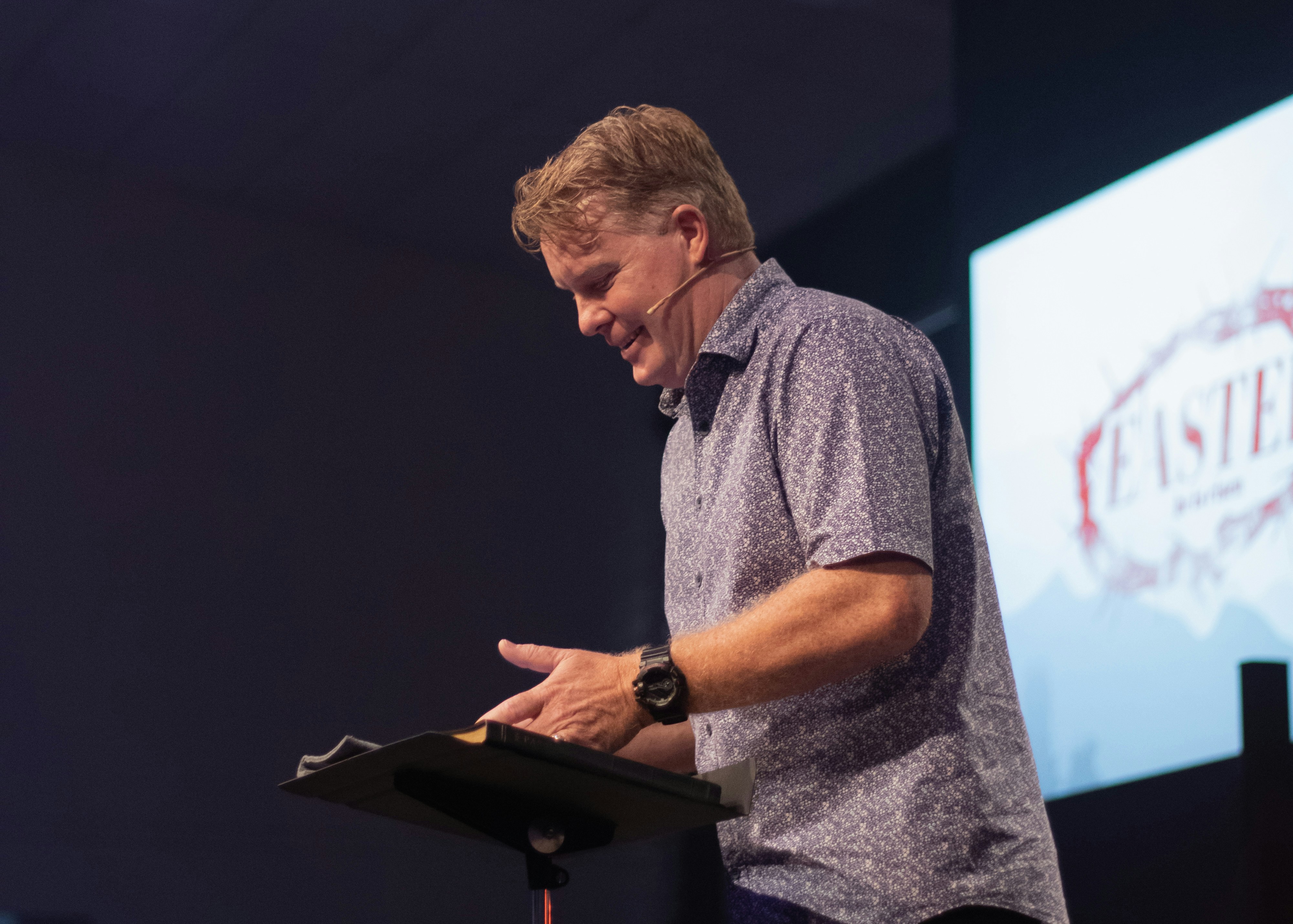
In a previous article, I described a few of the blessings we’ve enjoyed through a team-teaching approach to our Sunday morning worship service. Over the last seven years, as we’ve received feedback from our congregation and observed the general spiritual lives of our people, we’ve been able to identify several specific ways that the team-teaching model has blessed the believers of Creekside Bible Church.
A question one might ask is whether team teaching is the model that best aligns with Scripture. That’s a fair question. But I would respond with another question: “What New Testament warrant do we have for the sole preacher model?” It seems to me that the sole-preacher model can be defended from two places: one practical and the other biblical. I will mention the practical first.
How Do We Steward the Unique Gifts of a Highly Effective Preacher?
The practical rationale for a sole-preacher model concerns gift stewardship, and I’ve heard it go like this. If a man is particularly skilled in preaching, the congregation and the other leaders have a responsibility to make the most of that gift by designating the gifted preacher as the primary preacher. In one case I know of, this rationale was the main justification for why a church established a satellite campus with video preaching from the main preacher instead of installing a live preacher at each satellite location. In their minds, it was a matter of how best to steward this popular preacher’s unique gifts.
The biblical argument might draw from the history of redemption and show how God has used solitary leaders and preachers to accomplish his work among his people. Here we could appeal to Moses, Joshua, David, and Solomon, while turning to the New Testament to show that Paul appointed solitary preachers—Timothy and Titus—to lead and teach the congregation.
Concerning the practical rationale, I will leave it to the wisdom of the elders of local congregations to answer the question of whether a man’s gifts warrant his installation as the primary preacher. But even this question should first yield to the biblical evidence, much of which I see providing warrant for a team-teaching model as you move from the Old to the New Testament.
A Church Led by Qualified Men
First, the church is to be managed by a plurality of qualified men, each of whom has equal authority within the congregation and among the other elders. While all elders must be able to teach (1 Tim 3:2), there will be a spectrum of teaching gifts among qualified elders, as Paul indicates in his first letter to Timothy: “Let the elders who rule well be considered worthy of double honor, especially those who labor in preaching and teaching” (1 Tim 5:17; emphasis added).
Among the elders—all of whom must be gifted in teaching—there will be some whose primary focus will be preaching and teaching, presumably because their gifts necessitate this focus. But even here we see that there may be more than one man whose focus is preaching and teaching. Paul says, “…especially those who labor [plural participle] in preaching and teaching.”
Second, it is not entirely accurate to say that Timothy and Titus were to take up the sole work of preaching and teaching. One of their primary tasks was to appoint qualified elders (1 Tim 3:1ff; Titus 1:5-9) and train men who would be able to teach others also (2 Tim 2:2).
Yes, it is true that Paul placed only Timothy and Titus in their posts in Ephesus and Crete respectively, but we must keep in mind that we are still in the foundation-building stage of the church at this point in redemptive history. To establish a proper church leadership structure, these local congregations needed Timothy and Titus to serve as the primary leaders and preachers for a season. This apostolic model would then yield to a multiplicity of elders overseeing and teaching the congregation.
Transition from Apostles to a Plurality of Elders
We see this transition beginning in Acts 15 as the elders join the apostles in their decision on how to handle questions of Gentile-Jewish relations (Acts 15:6). In Acts 20, Paul addresses the elders (plural) of the church of Ephesus and exhorts them to shepherd God’s flock with great vigilance (Acts 20:17-35). In other words, by the time we get to Acts 20, we find that all the elders are entrusted to guard the flock, not just one apostle or apostolic associate.
Regarding an appeal to the Old Testament model of solitary leaders, it is best to see these leaders and their roles as pictures of Christ, not a template for church leadership structure (see Matt 12:42; Acts 7:37; 13:26-35; Heb 3:2;4:8). During the Mosaic, conquest, and monarchical eras of Israel’s history, elders worked alongside Israel’s primary leaders (e.g., Ex 3:16; Josh 7:6; 1 Sam 8:4; 1 Chron 15:25).
But after Christ completed his work of redemption and ascended back to the Father, the elder office remained, while only Jesus is classified as the Chief Shepherd and head of the church (I Pet 5:4; Eph 5:23). Appeals to the Old Testament as precedent for the chief or sole preacher model, then, do not work, for they do not reckon with the progress of redemptive history and Christ’s fulfillment of the solitary leader role in Israel.
Nor does an appeal to the Old Testament account for the fact that the Levites (plural) were commanded to teach the law to Israel (Deut 24:8; 33:10; Deut 17:8-11) and that Aaron was appointed as an official spokesman alongside of Moses (Exod 4:14-15; 7:1-12; Lev 10:10). Team teaching, we might say, has precedent in the Old Testament.
Conclusion
Now, I do not think Scripture forbids a church from having a primary preacher. Indeed, some small churches do not presently have the resources or the men with whom to build a team of preachers who could share the pulpit on a regular basis. My point is that the New Testament evidence indicates that the team-teaching model is, at least, a biblically defensible option and, at most, may even be the best option, if resources and manpower allow for it in a given congregation. We’ve seen it bear great fruit in our setting. Perhaps it might do so in yours.