Read: Numbers 27:12-23
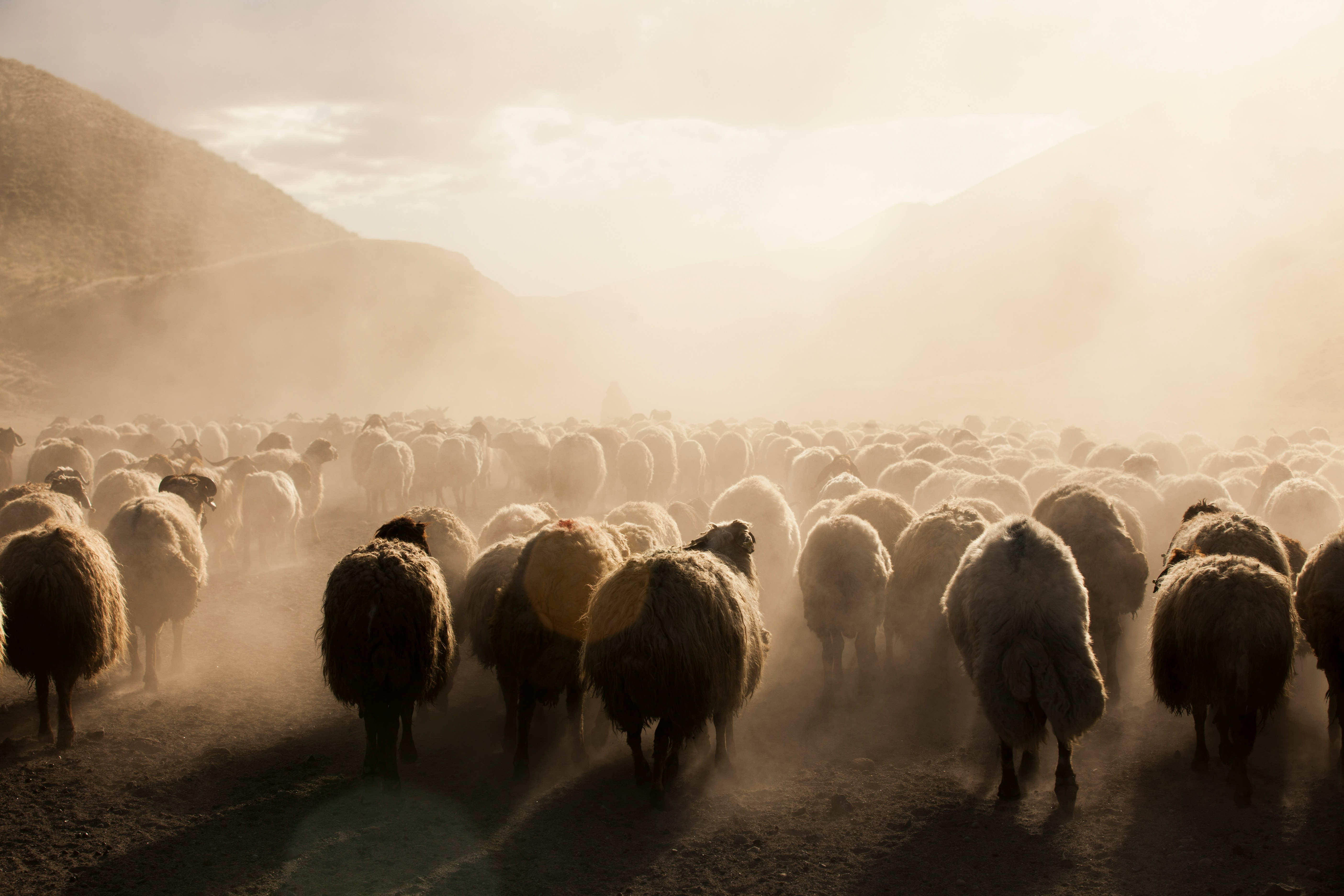
Because of Moses’ sin in front of the people at the waters of Meribah, God told Moses that he would not be leading the people into the Promised Land and would die outside of the Land. Moses, knowing his time was coming, had concern for the people he would be leaving behind. He knew that without a strong, godly, qualified leader, the people would be like sheep without a shepherd. So, he asks God to appoint such a leader over the people after him.
Why was this such a great concern for Moses? Well, what happens to sheep without a shepherd? They get eaten by wolves and other predators and they go wayward, driving themselves to places without food and water. Sheep without a shepherd are sheep in danger; in danger from bad actors and in danger from themselves.
A good shepherd protects, provides, and leads his sheep to keep them alive, healthy, and moving to good pastures. It is no wonder, then, why Moses and then later biblical authors apply the imagery of shepherds to the various human leaders of God’s people. God is the chief shepherd (1 Pet 5:4) of his people, and through the various ages he has appointed under him judges (2 Sam. 7:7), kings (2 Sam. 5:2), and in the church age, pastors (1 Pet. 5:2) to shepherd his people. It is proven time and time again in the biblical narrative and throughout the church age that when there are no qualified, godly, leaders the people either go astray or are ravaged by wolves.
We see this with Israel after Joshua in the time of the judges. We see it with them during the split kingdom period when they were many times ruled by an ungodly king. And we even see it in the New Testament in places like Paul’s last warning and exhortation to the Ephesians elders in Acts 20.
It’s no surprise, then, that we still see the same effect throughout history and up to today. One historical example of this is with the Protestants in France during the seventeenth century. In 1685 the Catholic King Louis XIV issued the Edict of Fontainebleau which mandated that Protestant pastors had two weeks to either leave France or convert to Catholicism under penalty of imprisonment, forced labor, or execution if they failed to do one or the other. At the same time, Protestant laity (the regular members of the various Protestant churches) weren’t allowed to leave France under the threat of the confiscation of their land and property.
Louis XIV knew what he was doing. He knew that if he truly wanted to remove Protestantism from France he would need to get rid of the shepherds. And he very nearly accomplished his goal as almost overnight the Protestant churches in France were left without shepherds. Twenty percent of the Protestant pastors converted to Catholicism while the remaining number fled to places like Switzerland and the Netherlands.1 Due to the lack of pastors roughly two-thirds of the remaining Protestants in France converted to Catholicism.2
The remaining Protestants, who did not convert, still bravely met in secret studying the Word, singing hymns, and worshipping the risen Christ. However, because there were no qualified men to lead eventually unqualified men and women began leading the congregations. These “leaders” claimed inspiration and had received visions and very quickly led the people into a brutal armed resistance against the French Monarchy.3
The lesson stands. As the sheep of God’s flock we need good shepherds protecting, leading, and providing for us. Men who fit the qualifications listed in 1 Timothy 3 and Titus 1. Without such men we will be a flock in constant danger from wolves and from ourselves. Praise God for the men who He has chosen and equipped to lead His various local congregations throughout the world. May Moses’ concern for the people under his care and the lessons of history instill a deep gratitude for our pastors.
NOTES
1Jon Butler, The Huguenots in America: A Refugee People in New World Society (Morningside Cambridge: Harvard University Press, 1983), 13.
2Butler, The Huguenots in America, 13.
3Stephen Davis, The War of the Camisards (1702-1704): Huguenot Insurrection during the Reign of Louis XIV (Eugene: Wipf & Stock, 2024), 33.